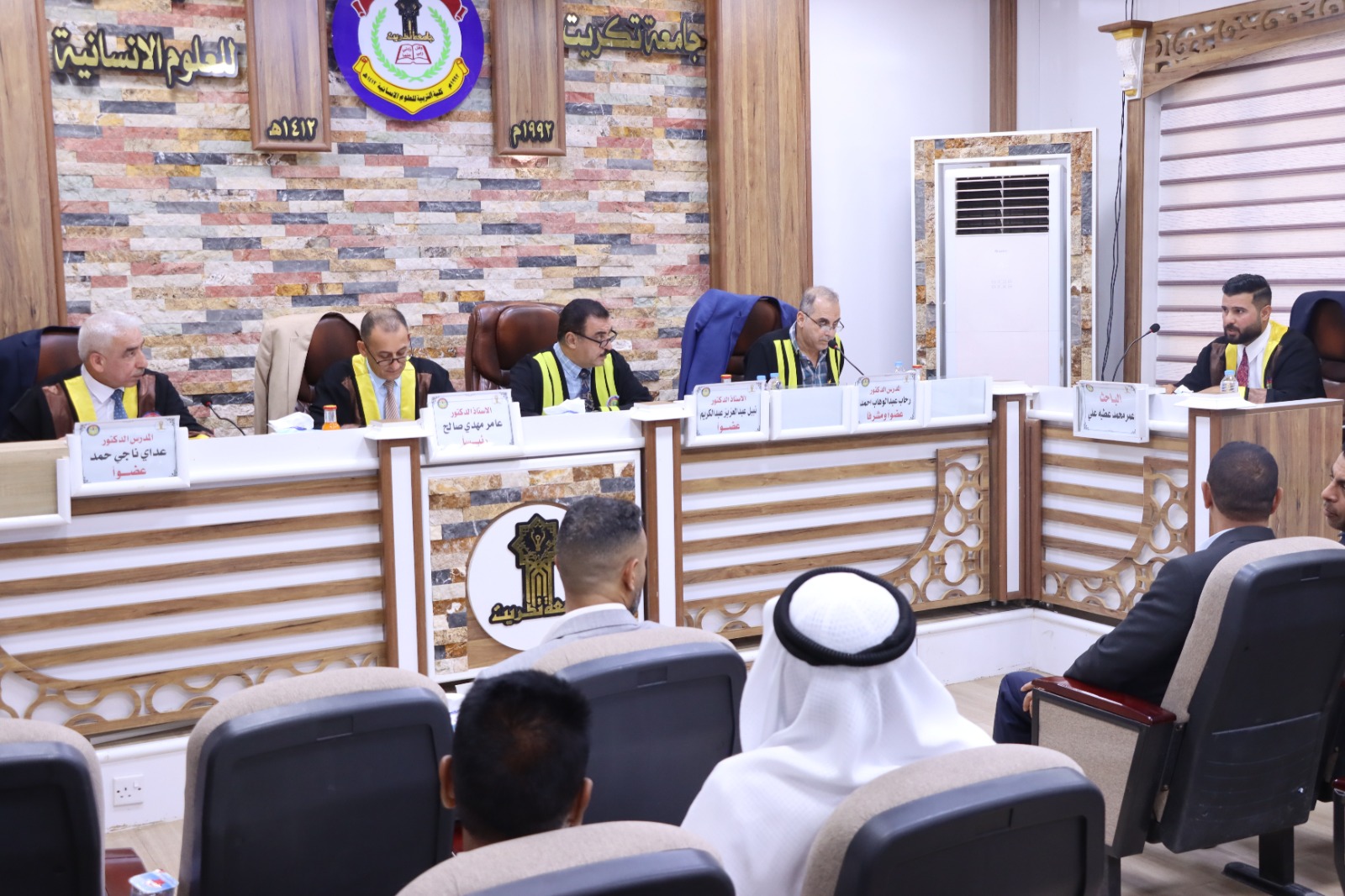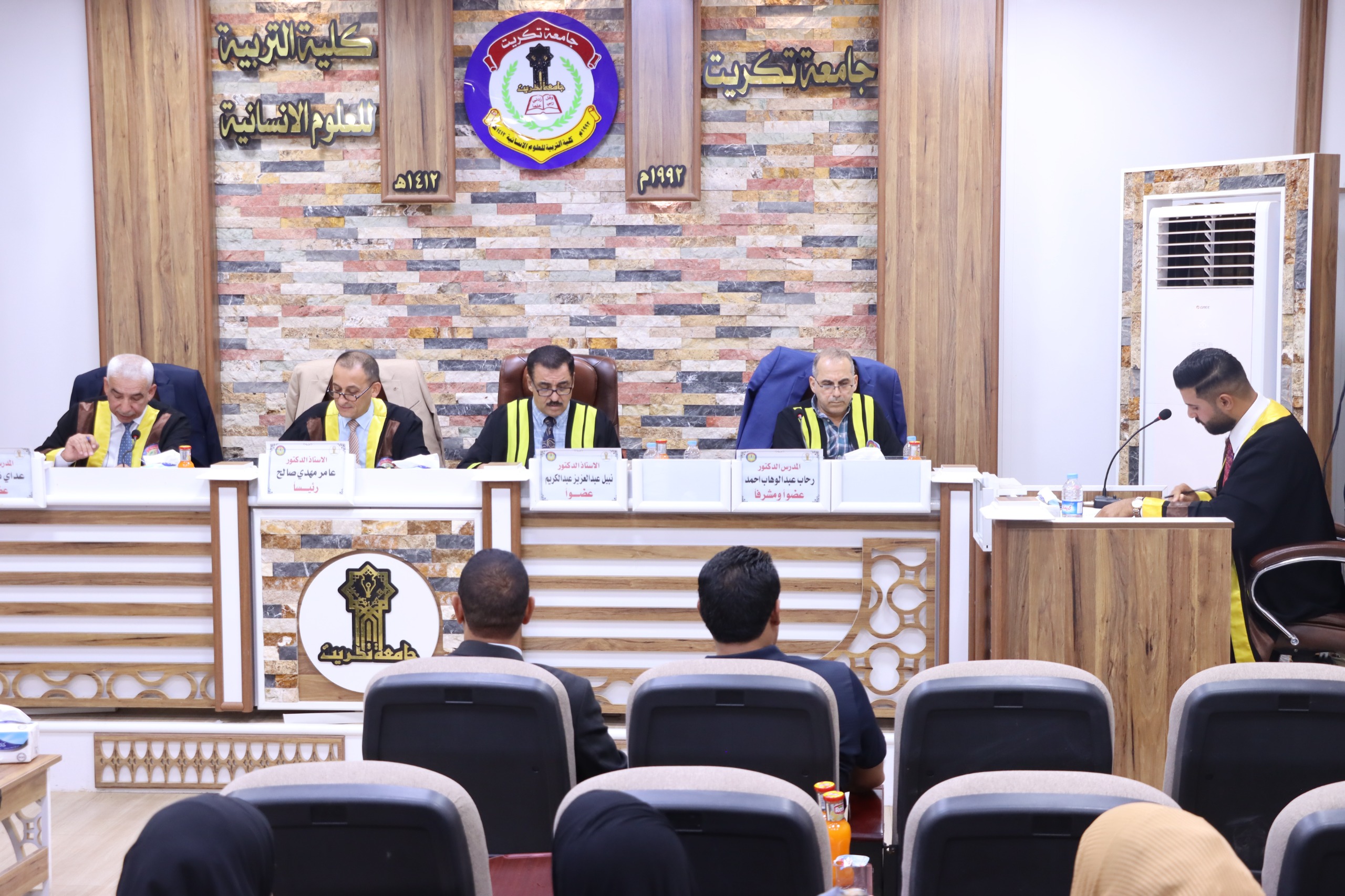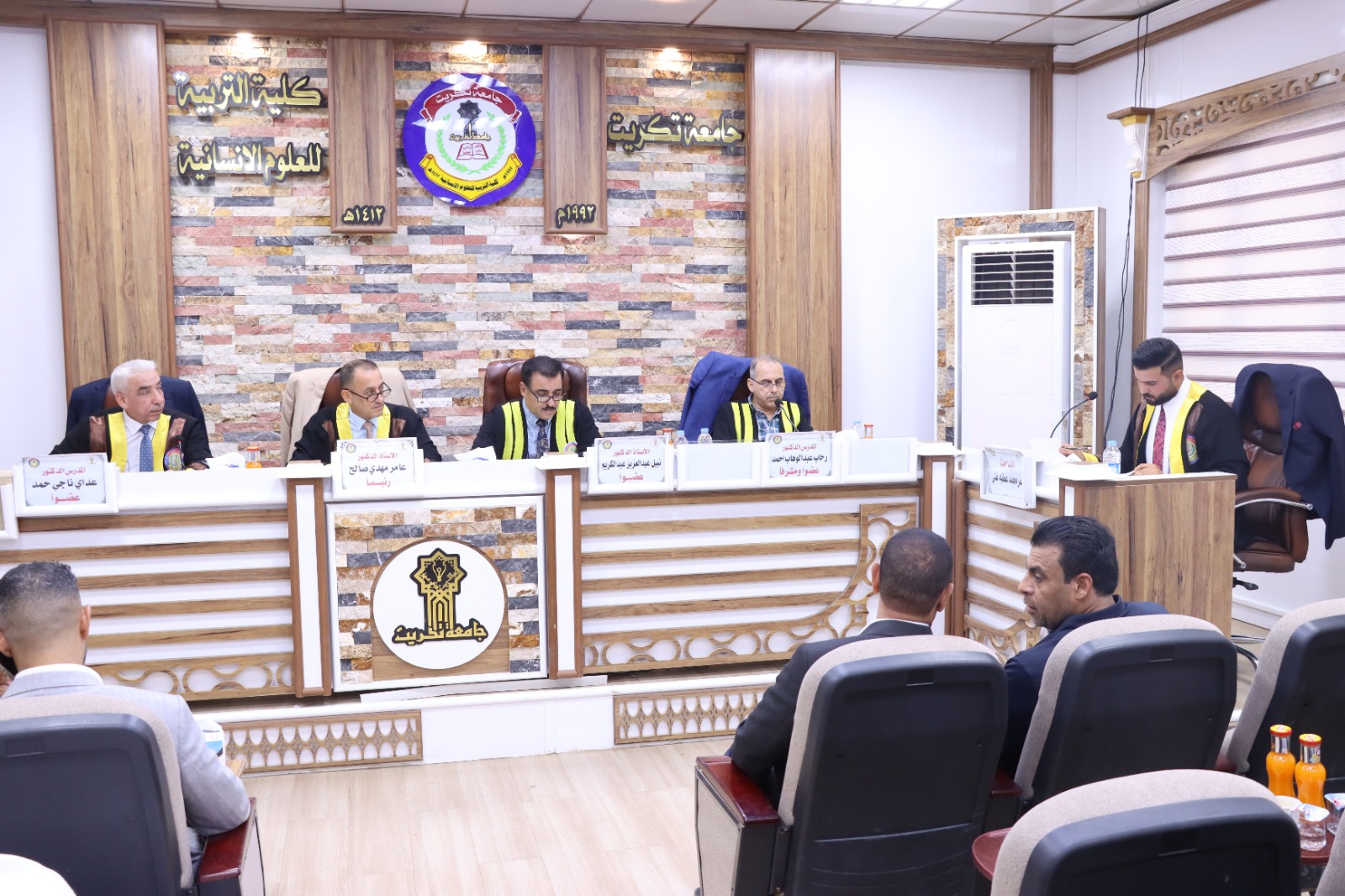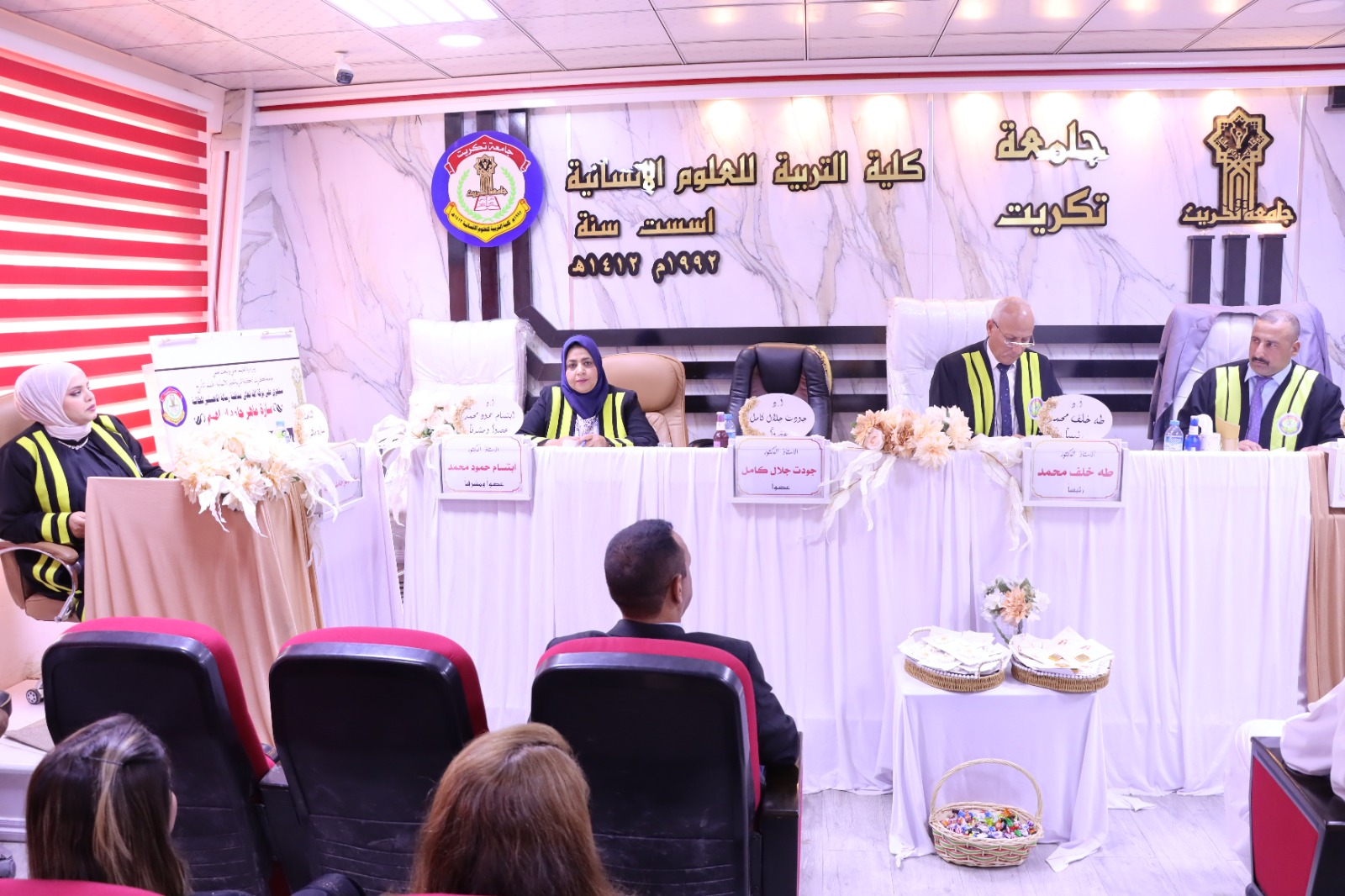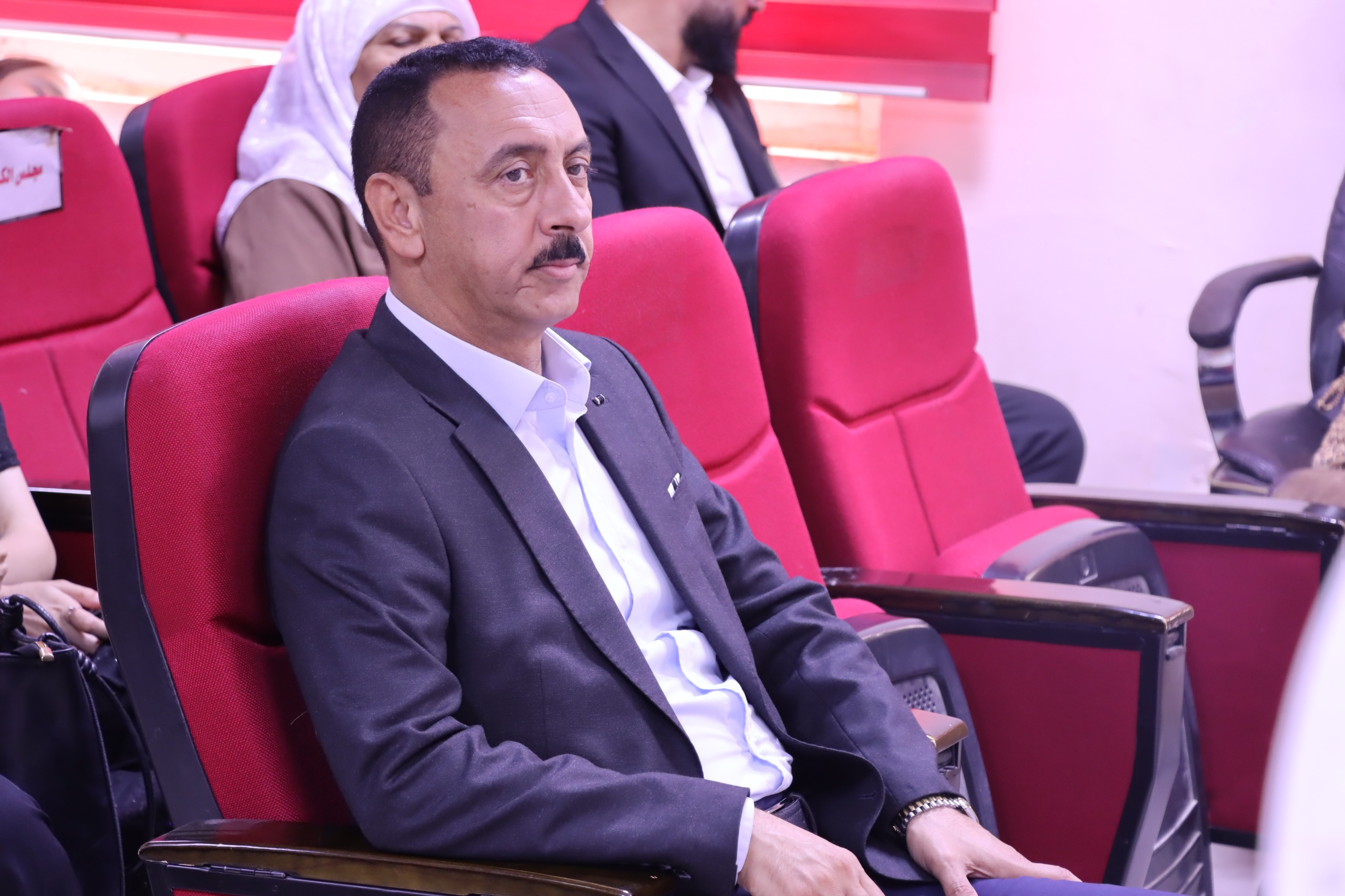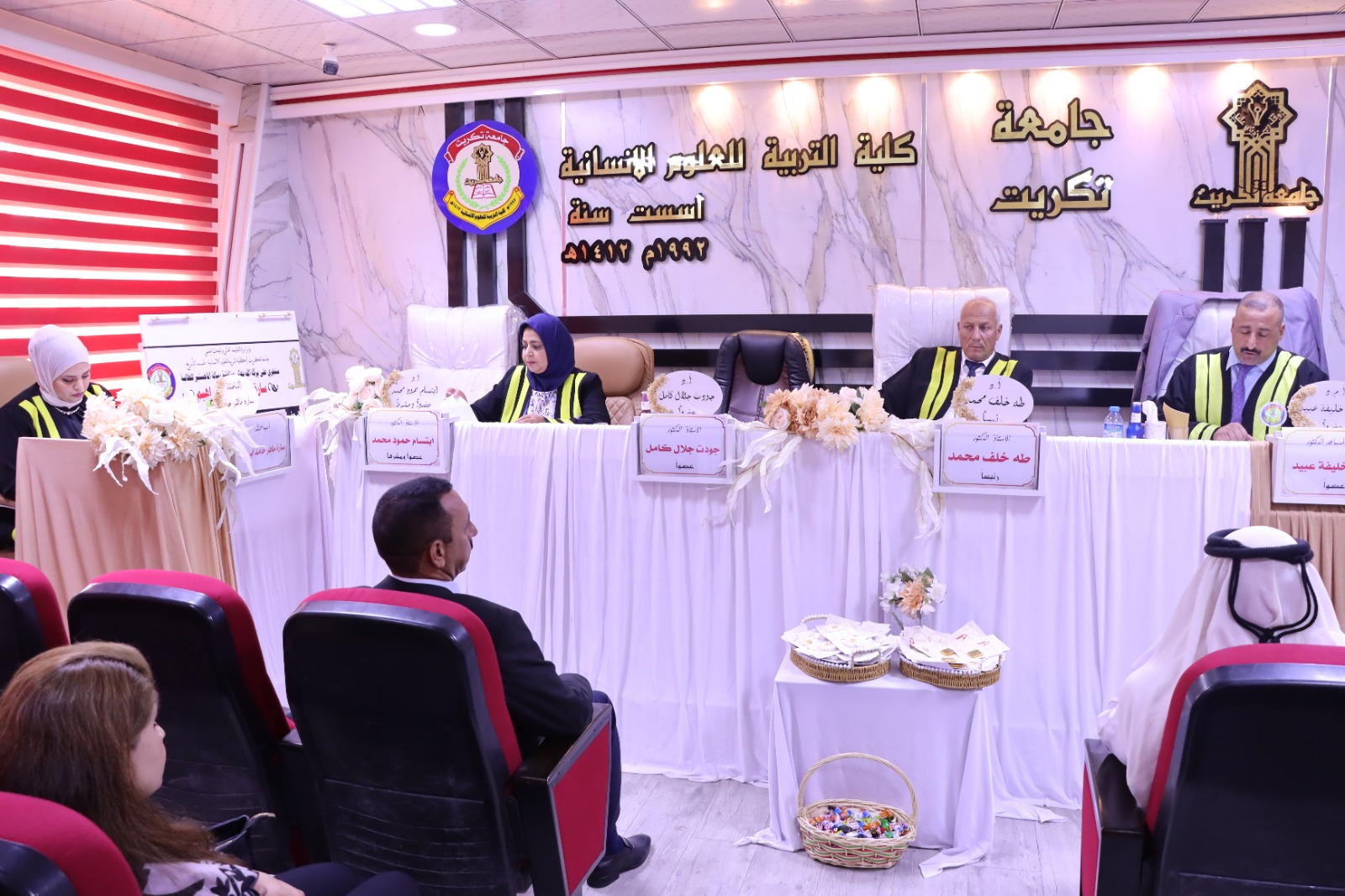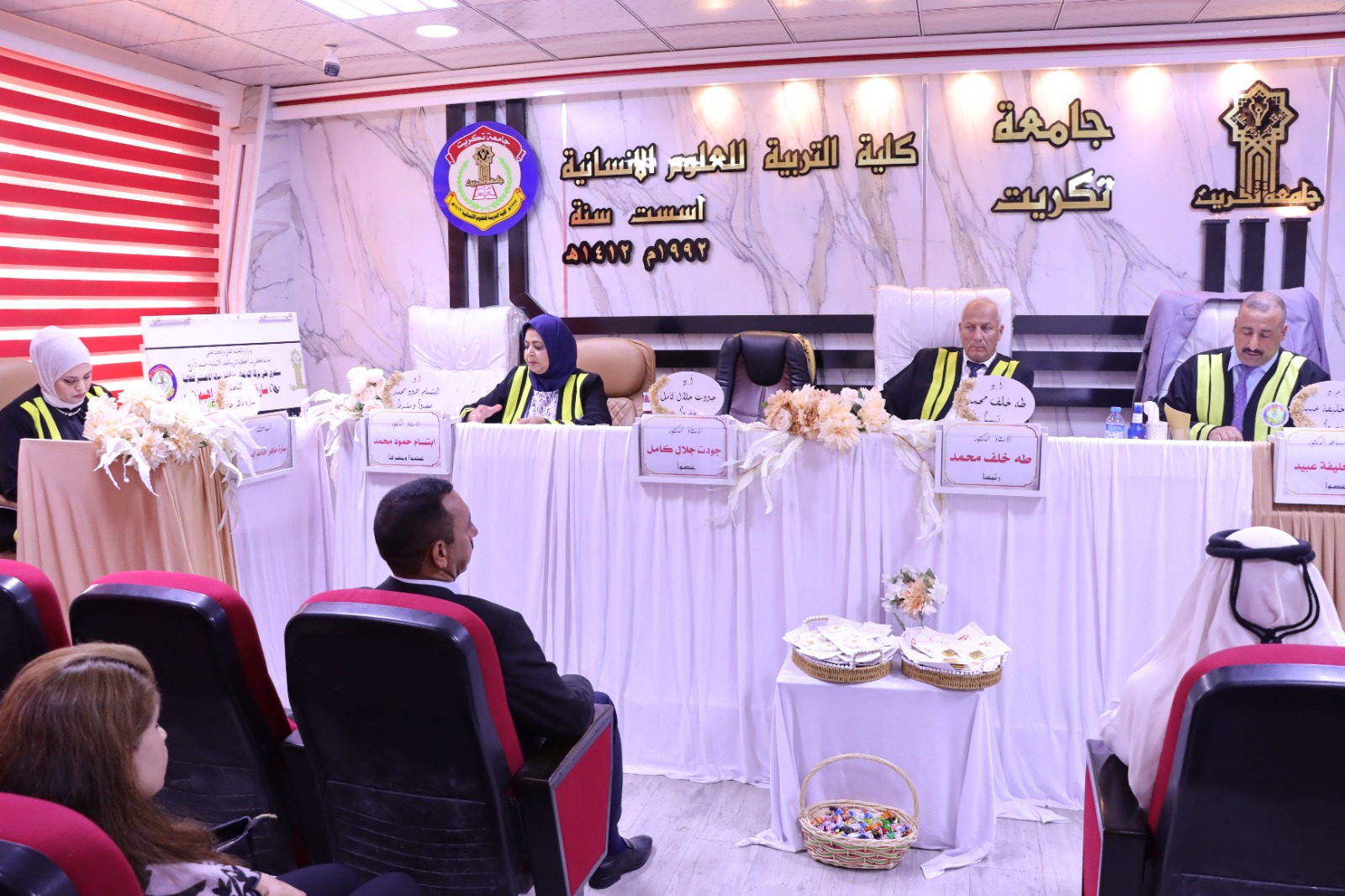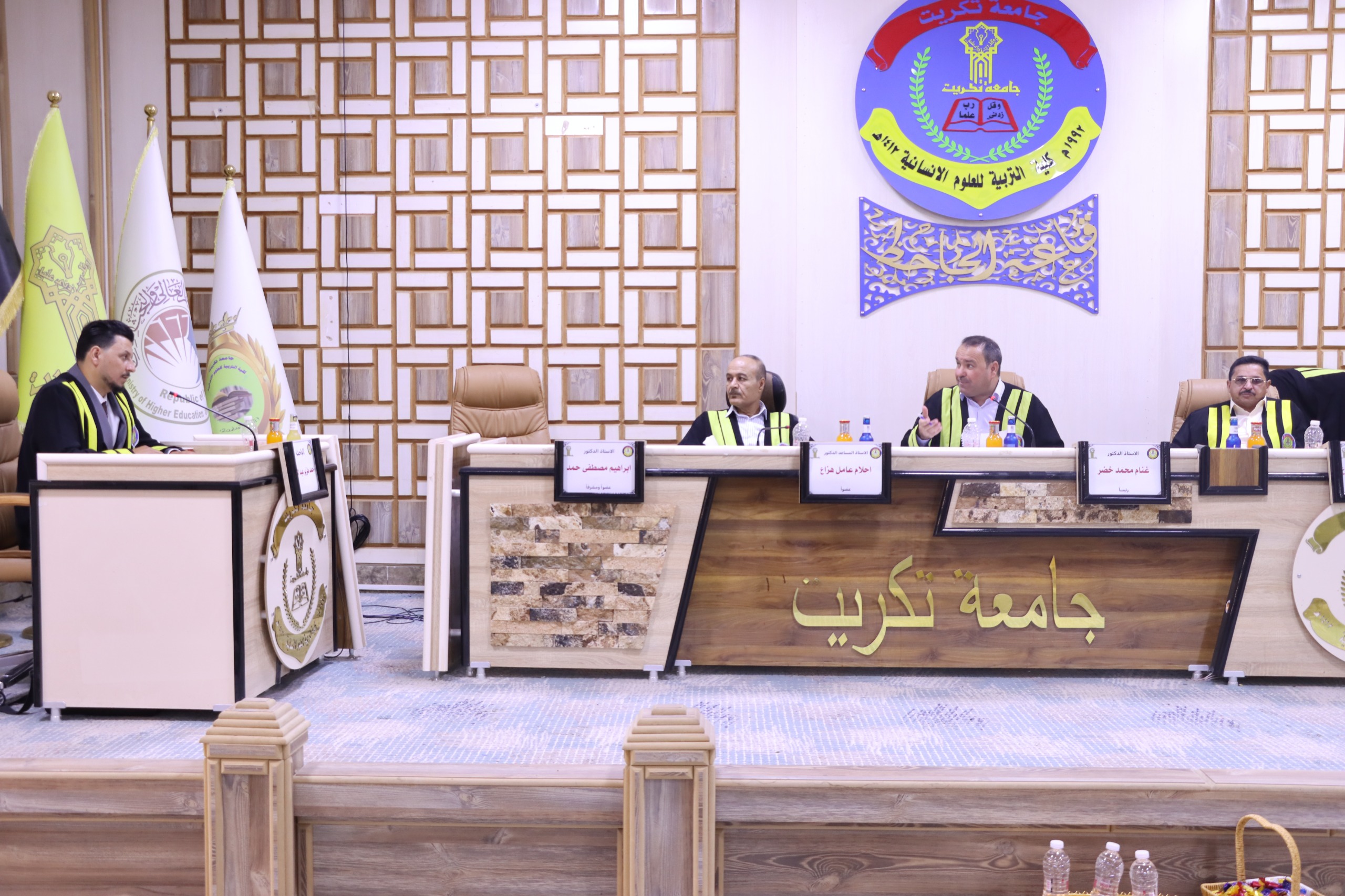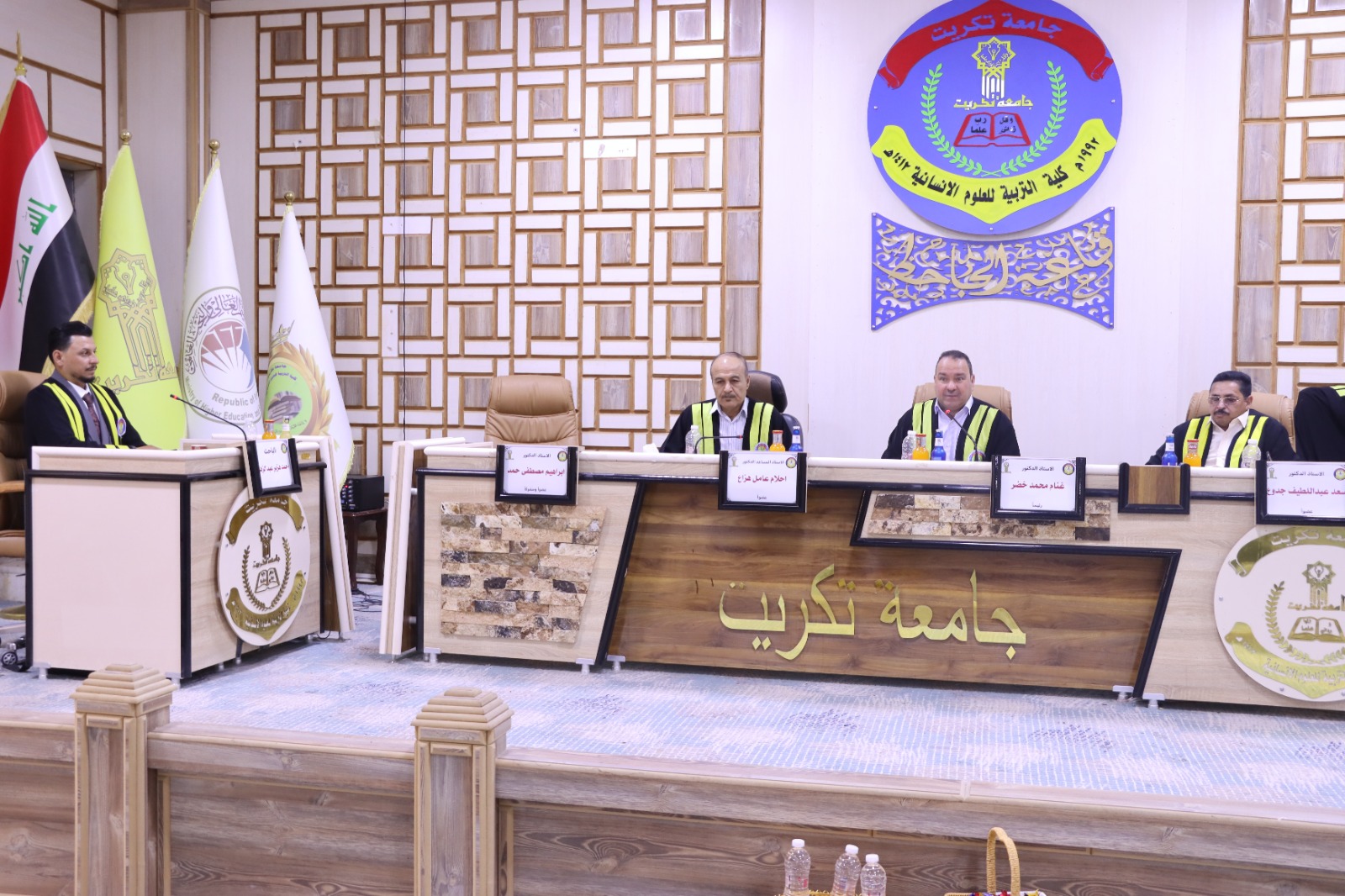
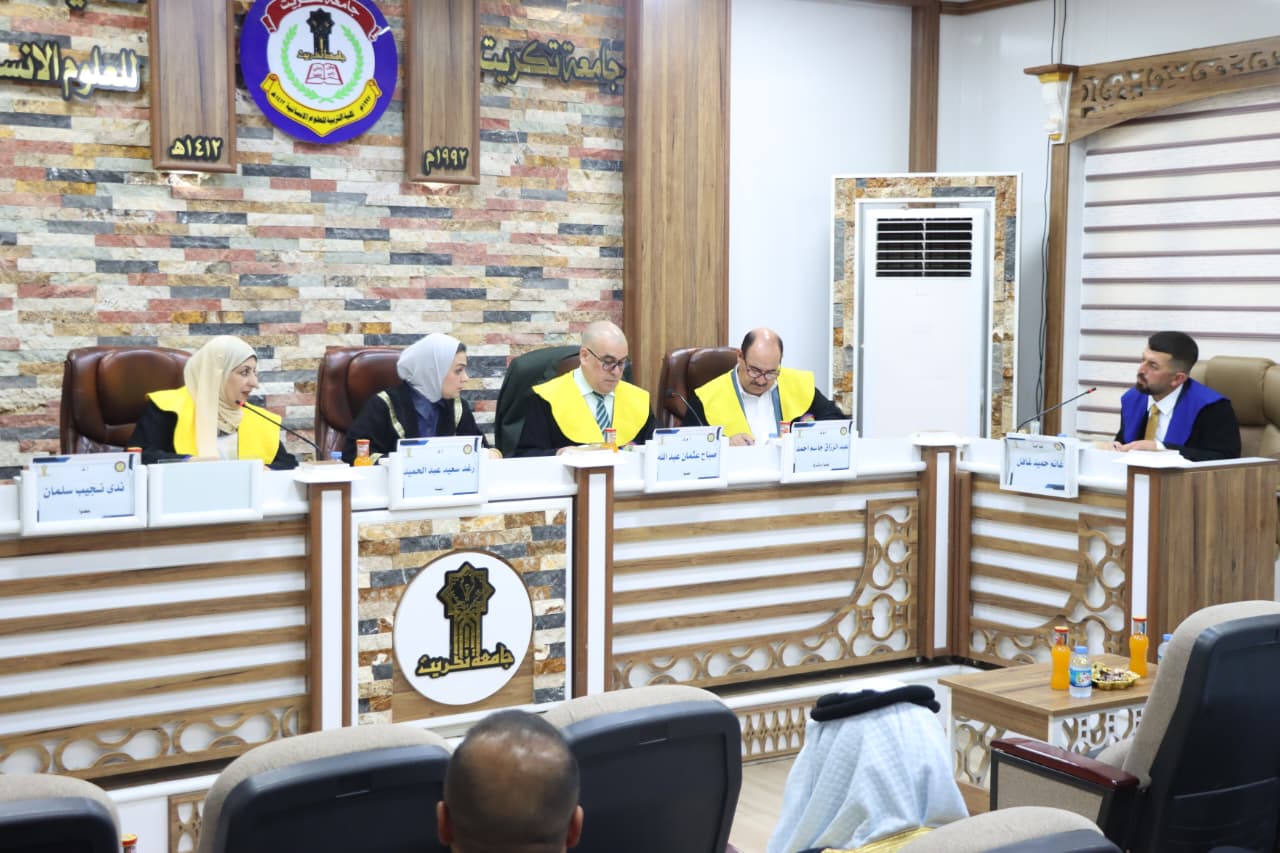
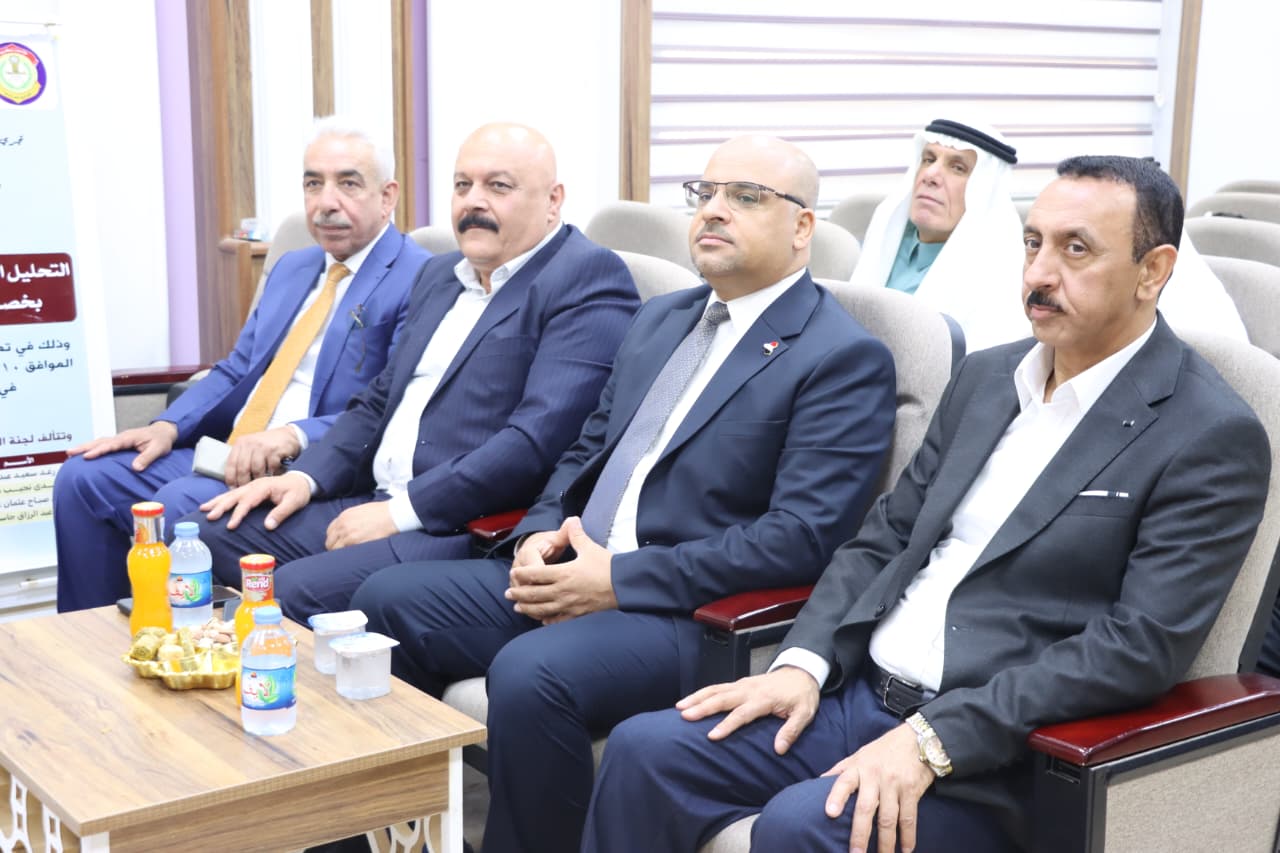
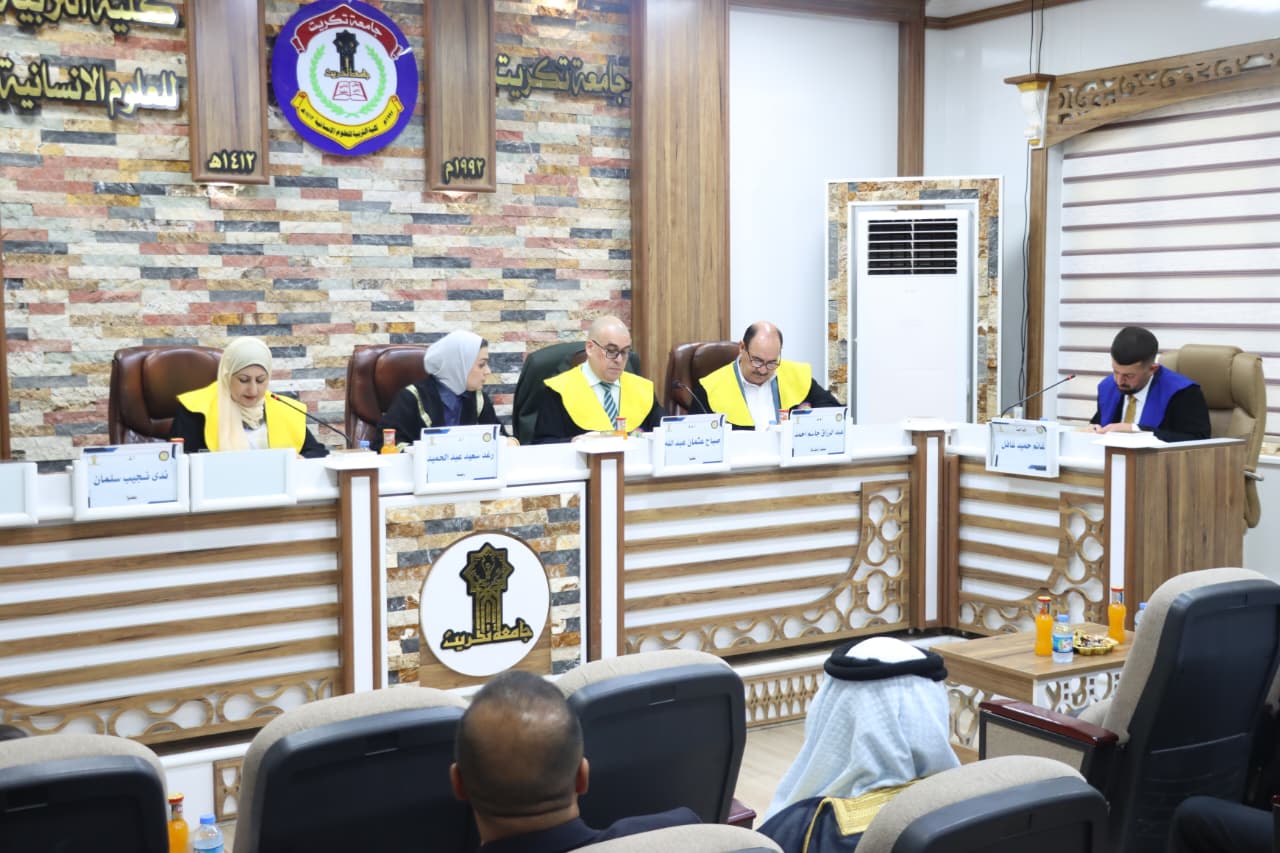
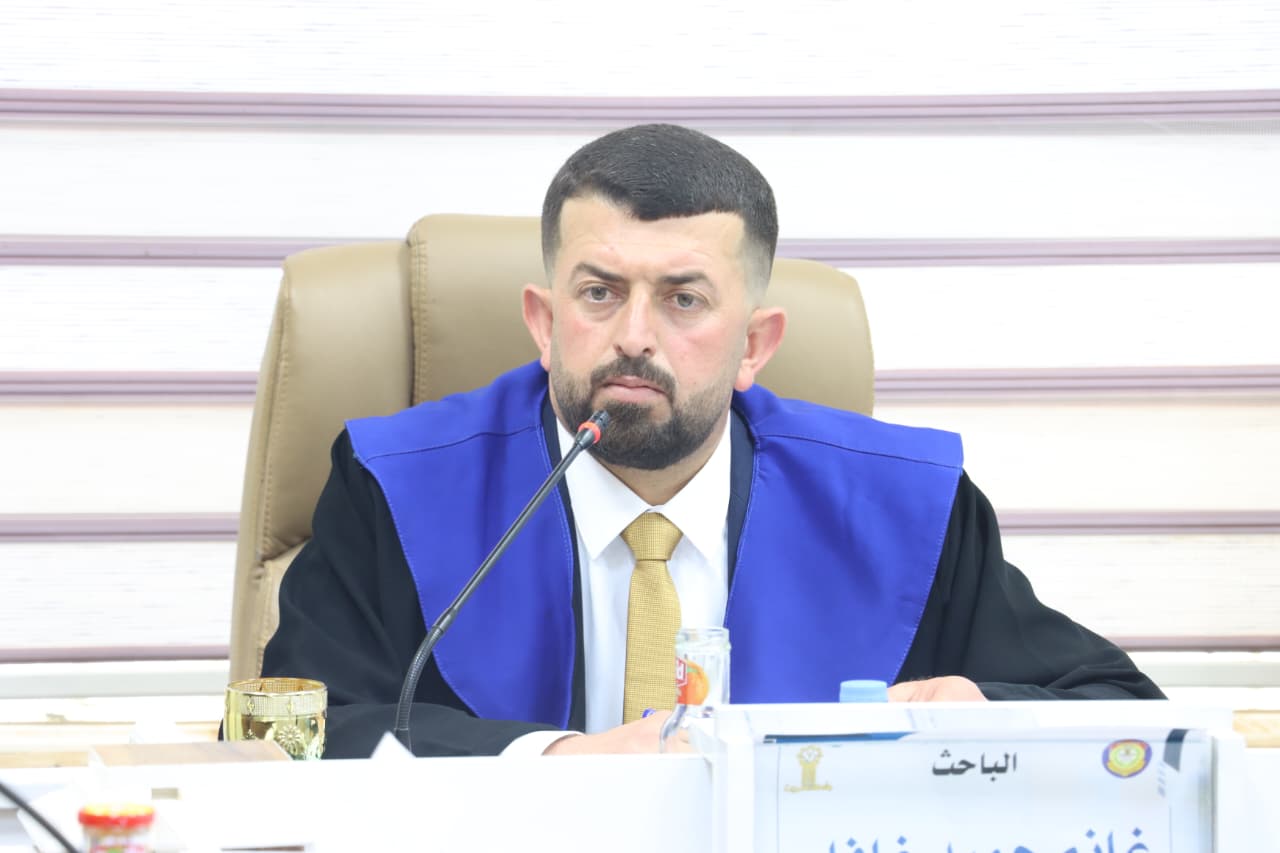
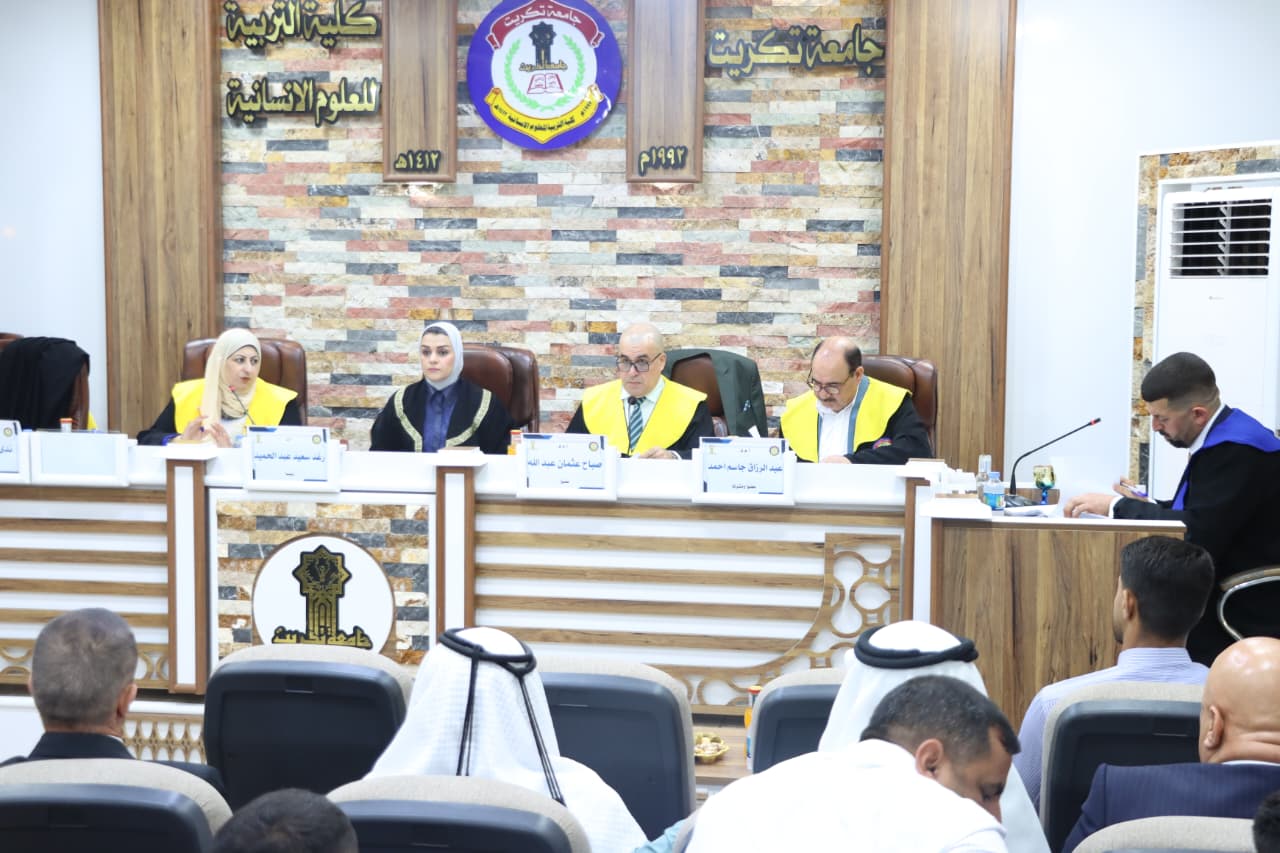
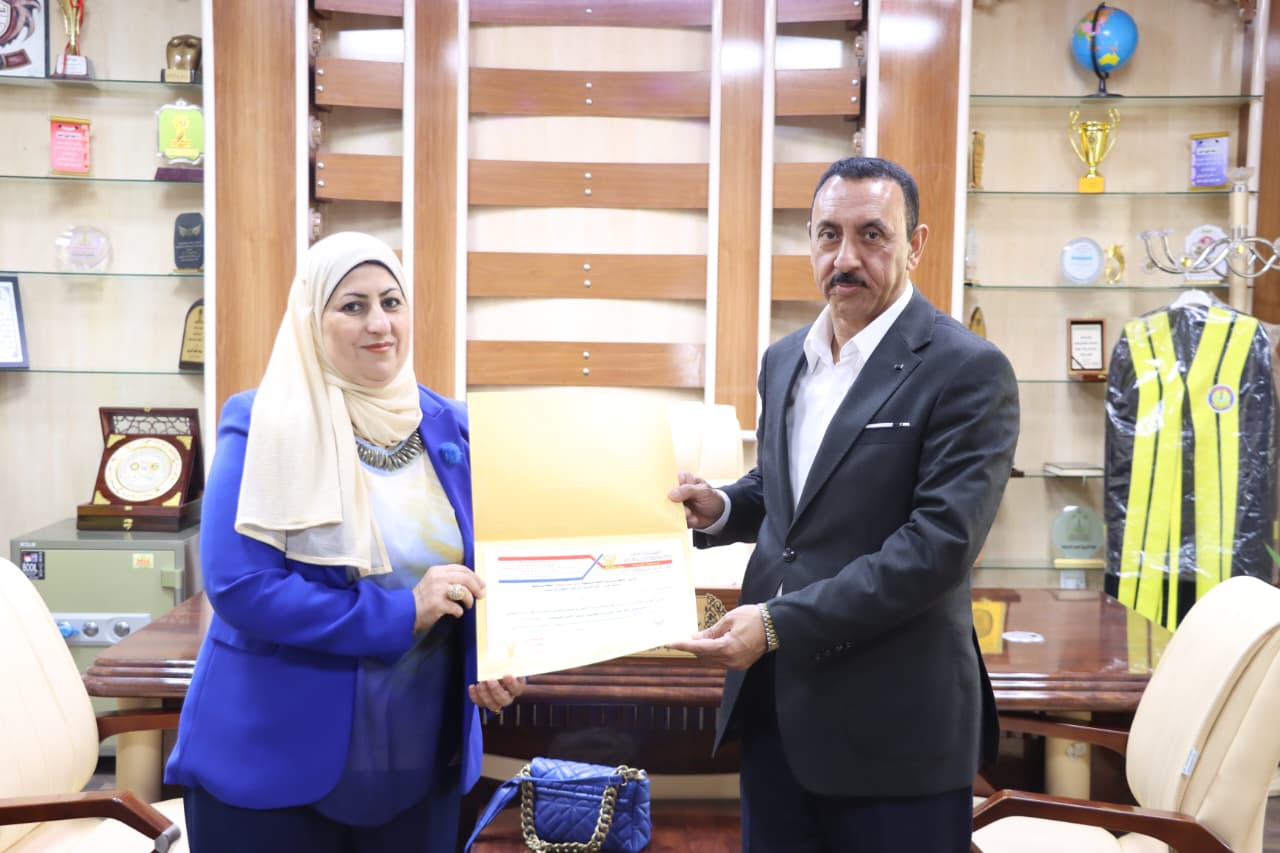
A master’s thesis was discussed in the Department of Geography at the College of Education for Humanities on Sunday (May 10, 2026), submitted by the candidate Ghanim Hamid Ghafel Al-Obaidi, entitled “The Geographical Analysis of Population Growth and Its Relationship with Family Characteristics in Al-Hawija District.”
Population growth is considered one of the most significant demographic phenomena, as its effects are directly reflected in the social and economic characteristics of the population, particularly in family structure, size, and composition. The family represents the fundamental unit in the social structure of society. Furthermore, the study of household size is regarded as an important demographic indicator that reflects the nature of demographic and social transformations experienced by society, in addition to its association with prevailing economic activities and the extent of women’s participation in them.
The study aimed to conduct a geographical analysis of population growth in Al-Hawija District and to examine its relationship with family characteristics, particularly household size and selected demographic and social attributes. It also sought to analyze changes in household sizes during the period (1997–2024), identify spatial variations of these characteristics across the administrative units within the study area, and determine the influencing factors and trends of change.
The thesis committee consisted of the following members:
- Prof. Dr. Raghd Saeed Abdulhamid – University of Tikrit, College of Education for Humanities (Chair)
- Prof. Dr. Nada Najeeb Salman – University of Baghdad, College of Education (Ibn Rushd) for Humanities (Member)
- Asst. Prof. Dr. Sabah Othman Abdullah – University of Tikrit, College of Education for Humanities (Member)
- Asst. Prof. Dr. Abdulrazzaq Jassim Ahmed – University of Tikrit, College of Education for Humanities (Member and Supervisor)
Media and Government Communication Division
College of Education for Humanities – University of Tikrit