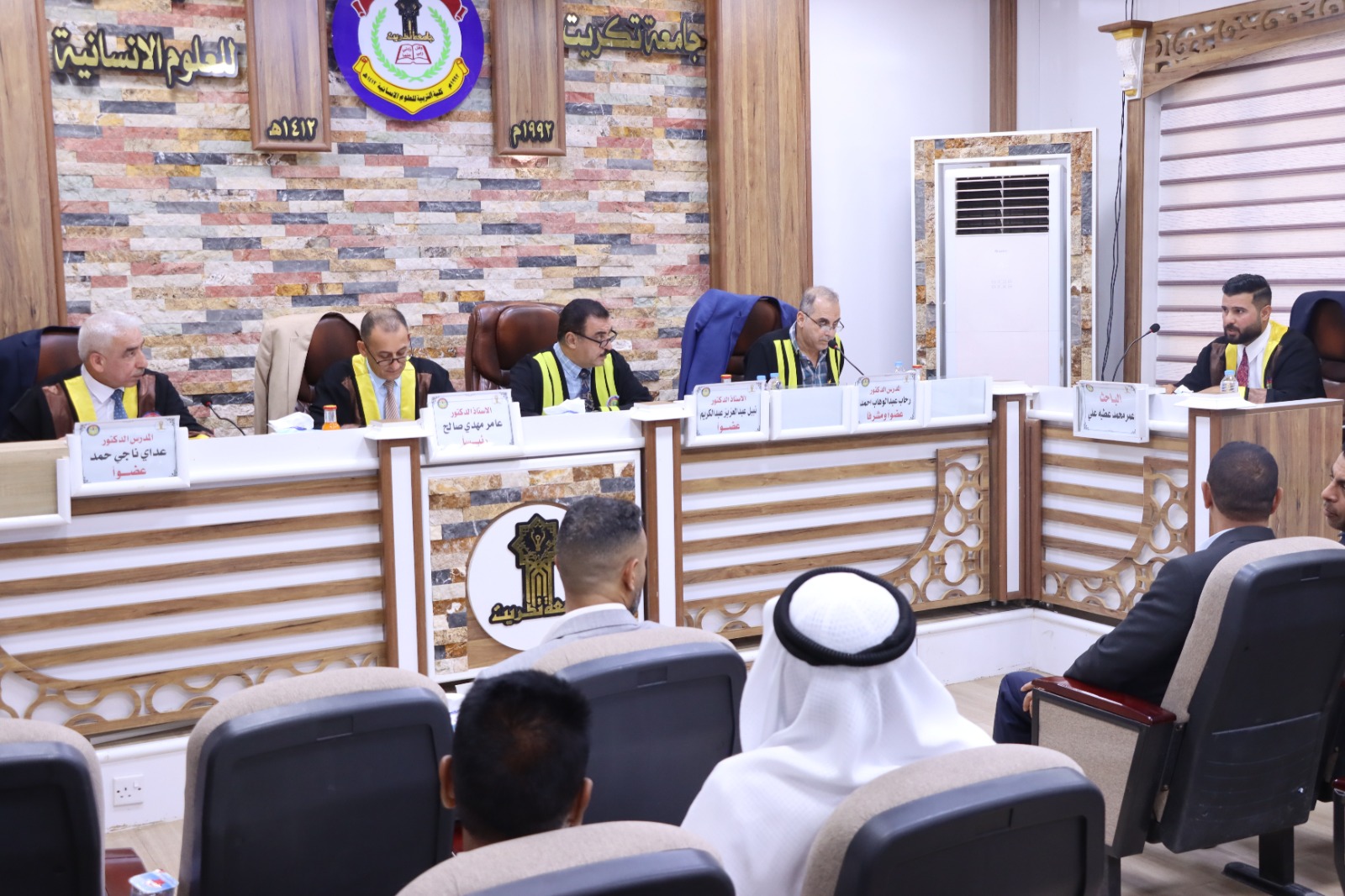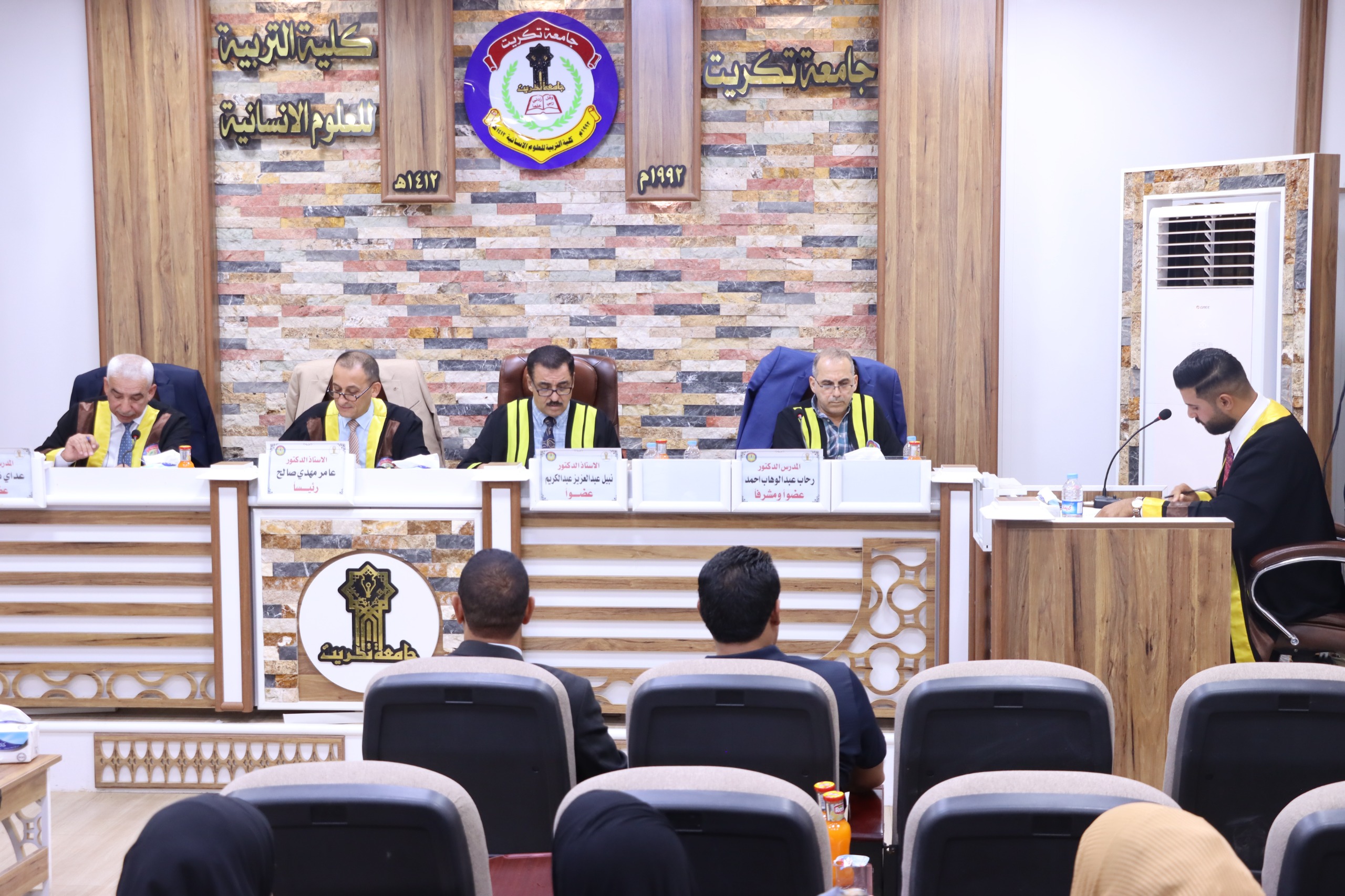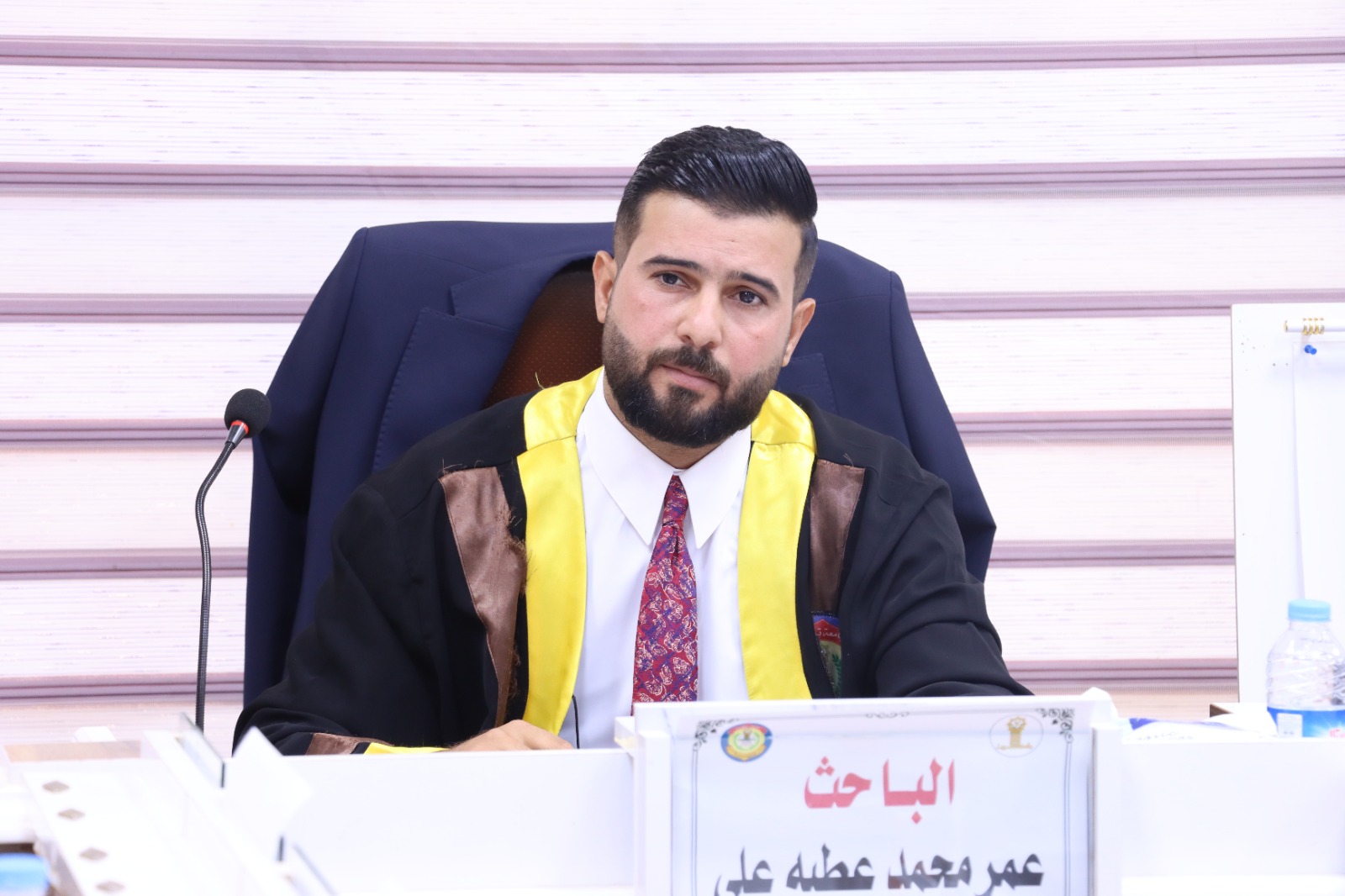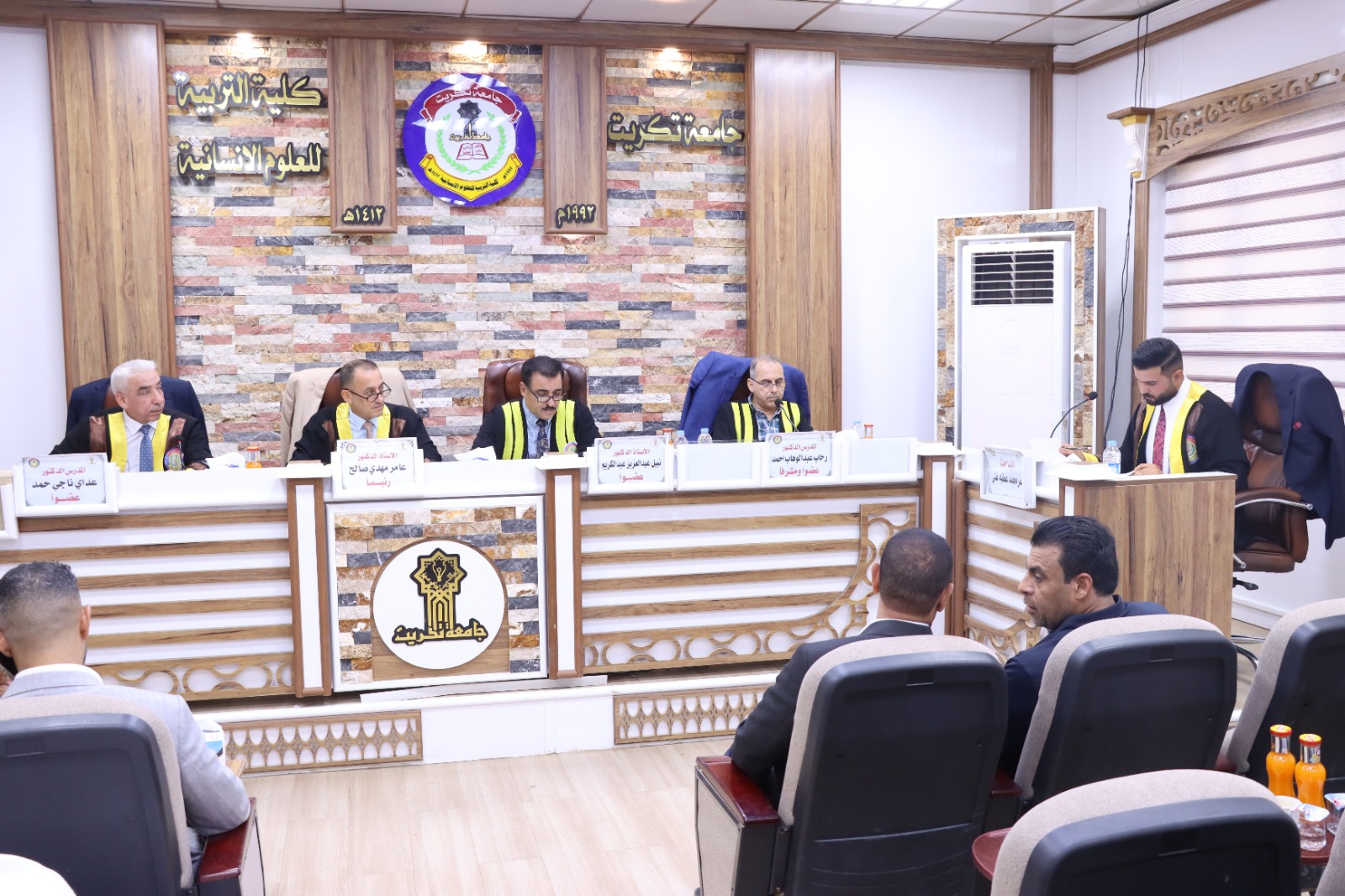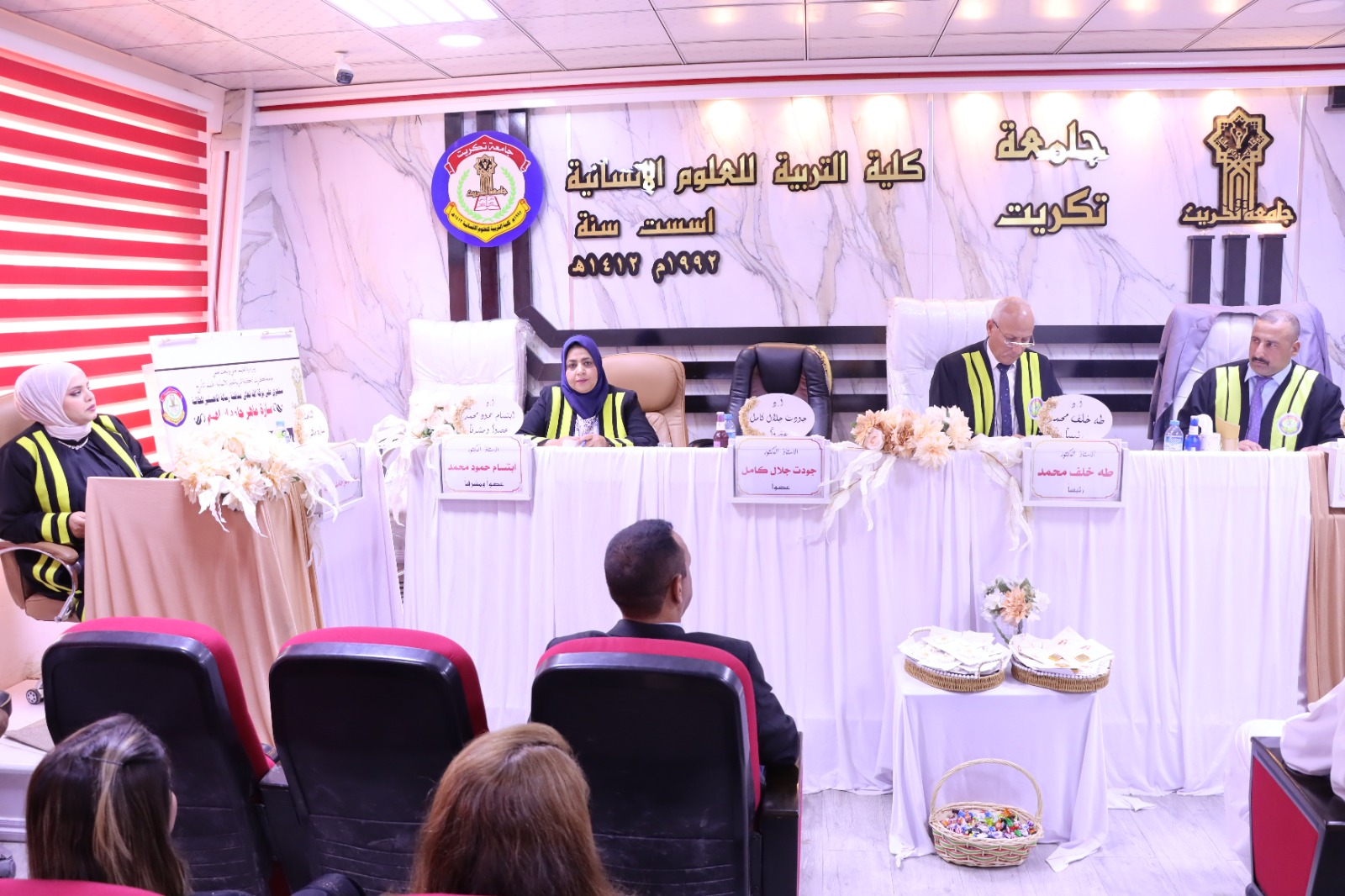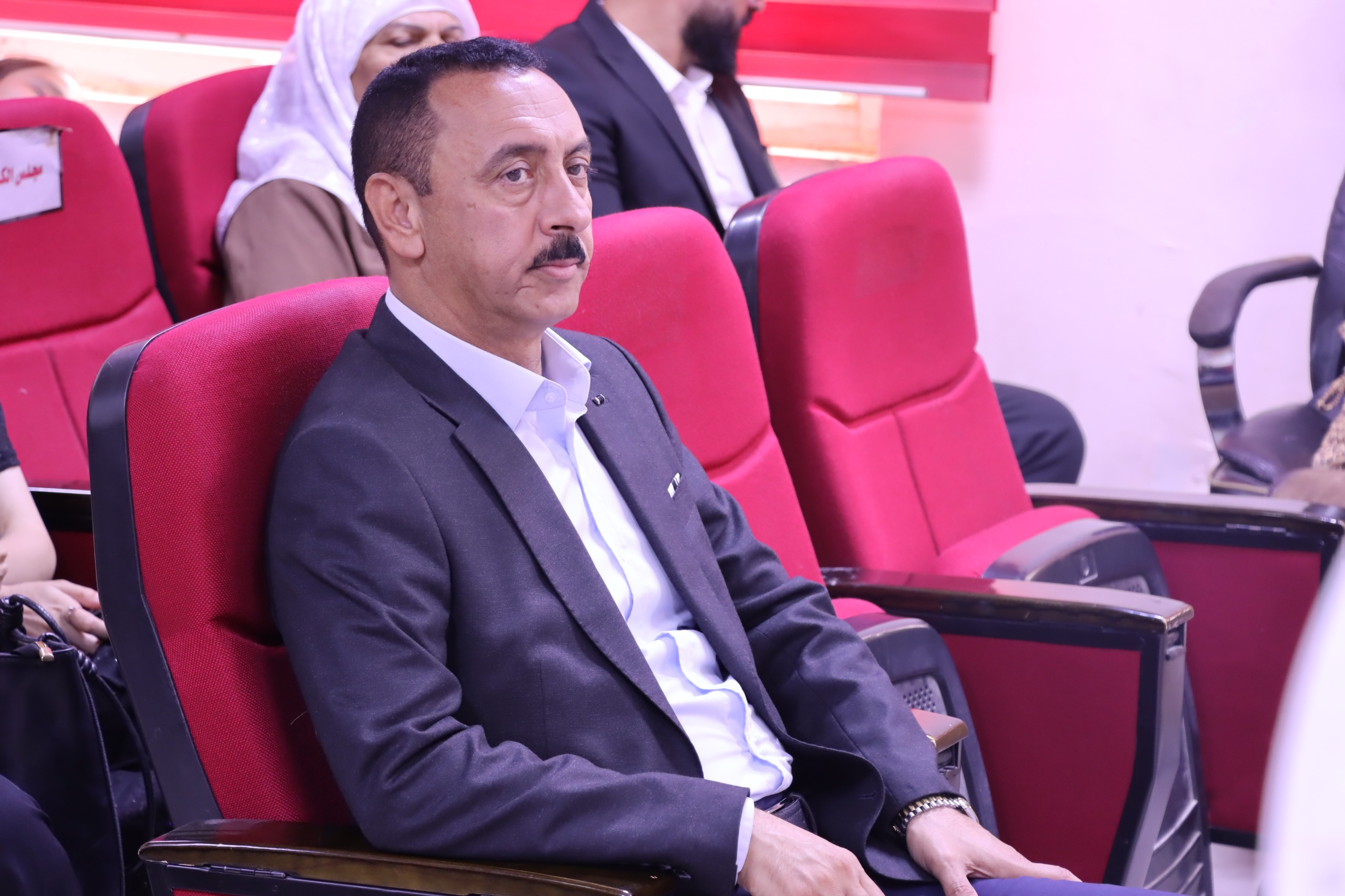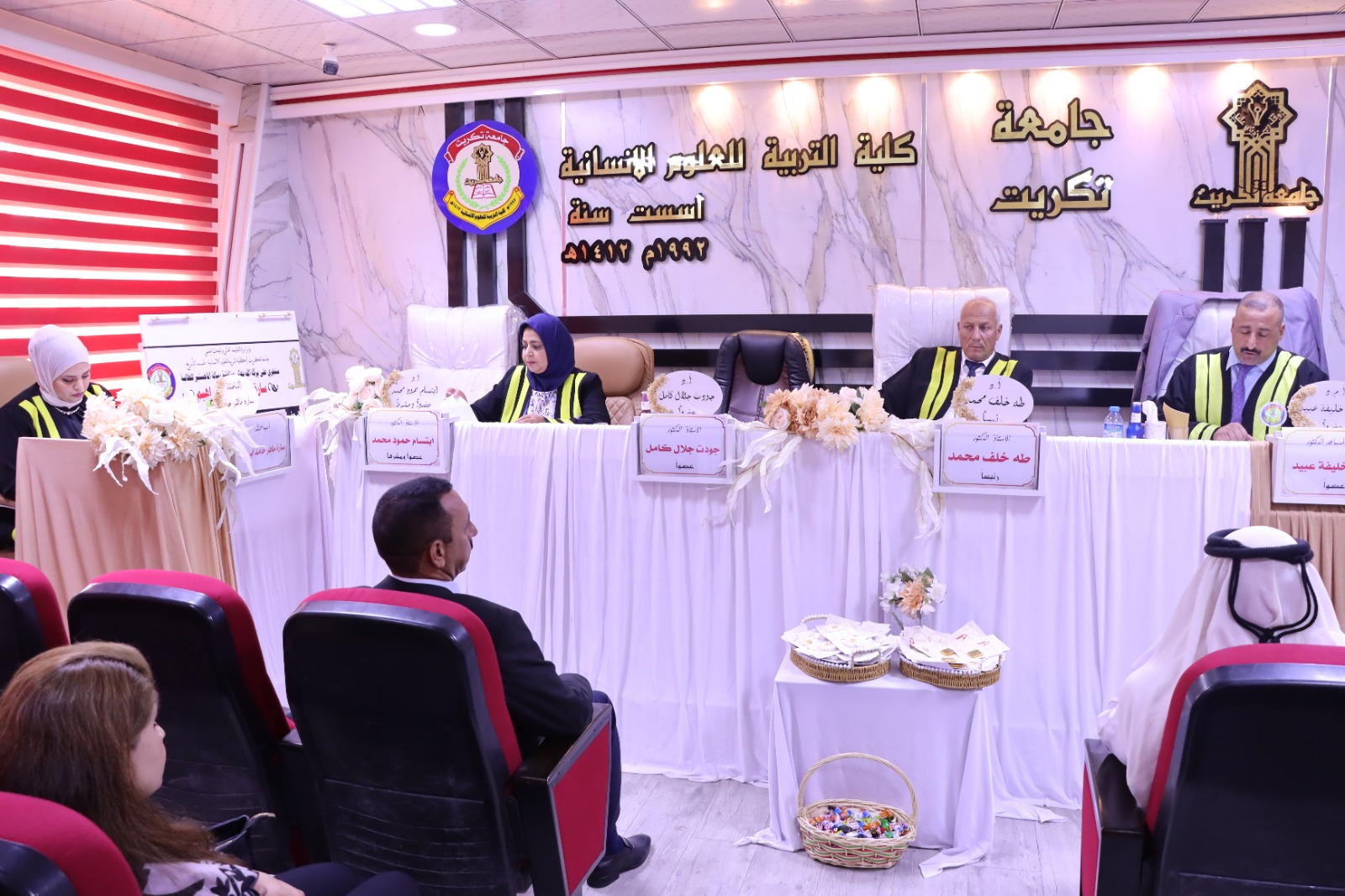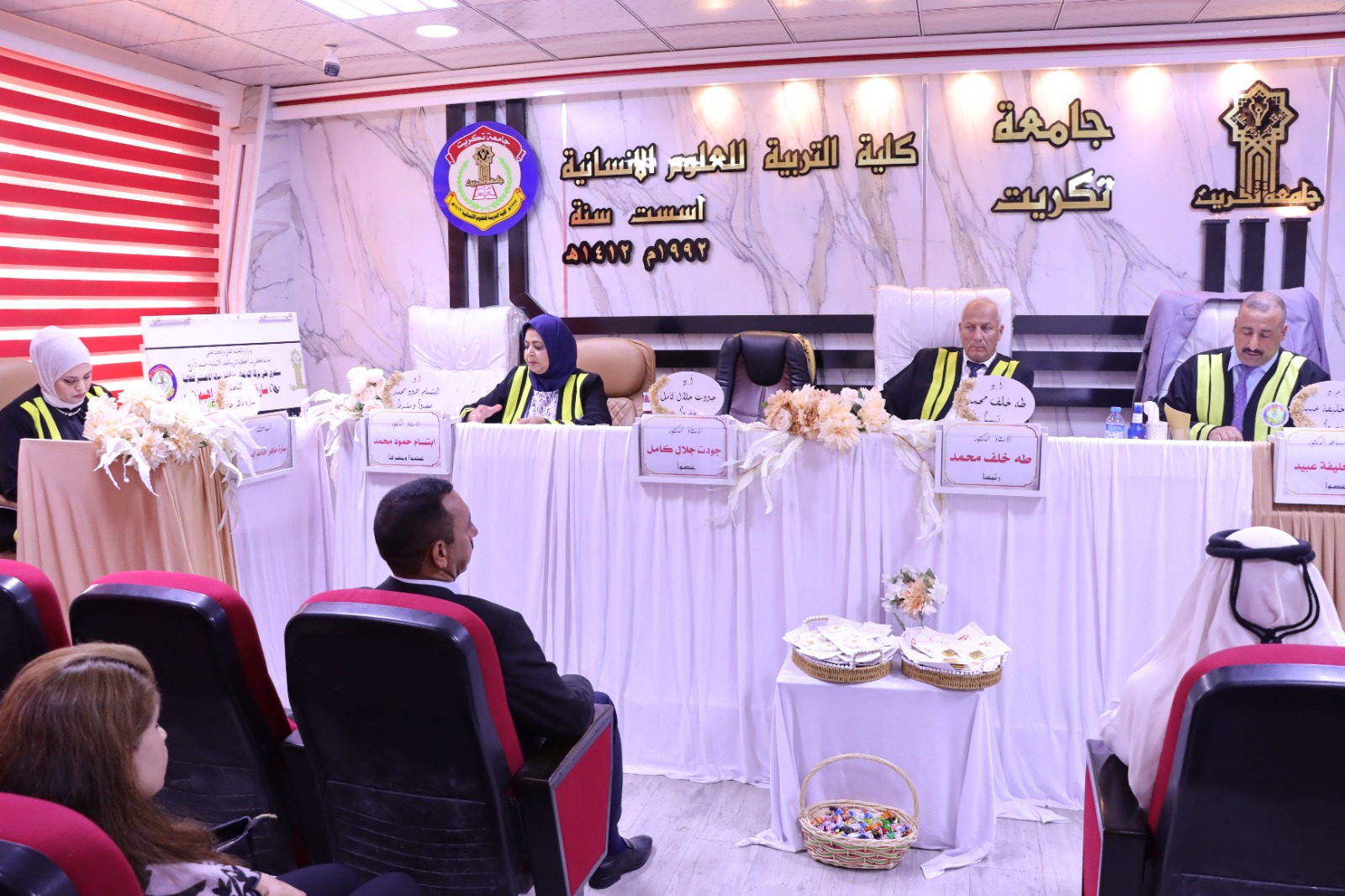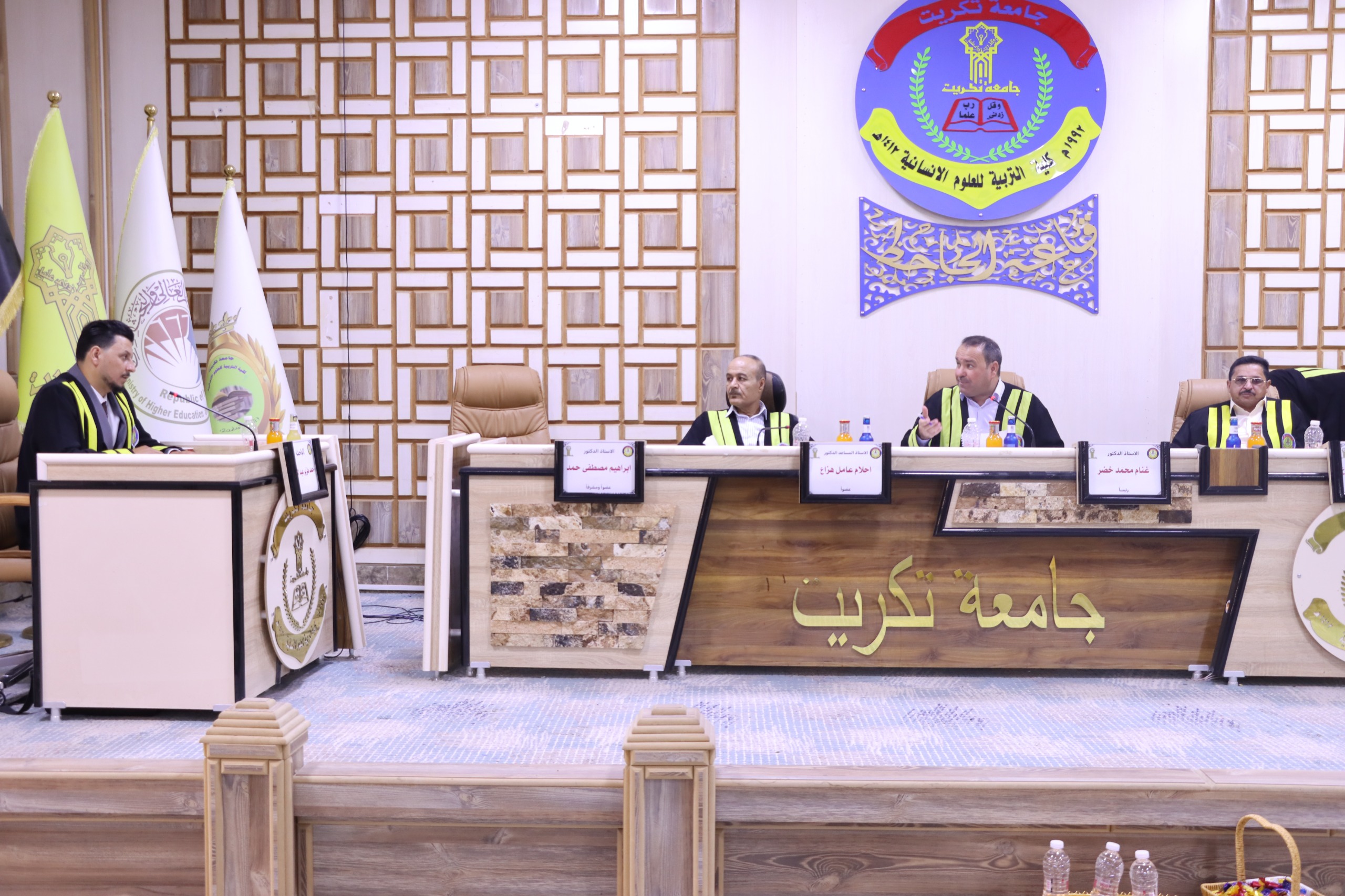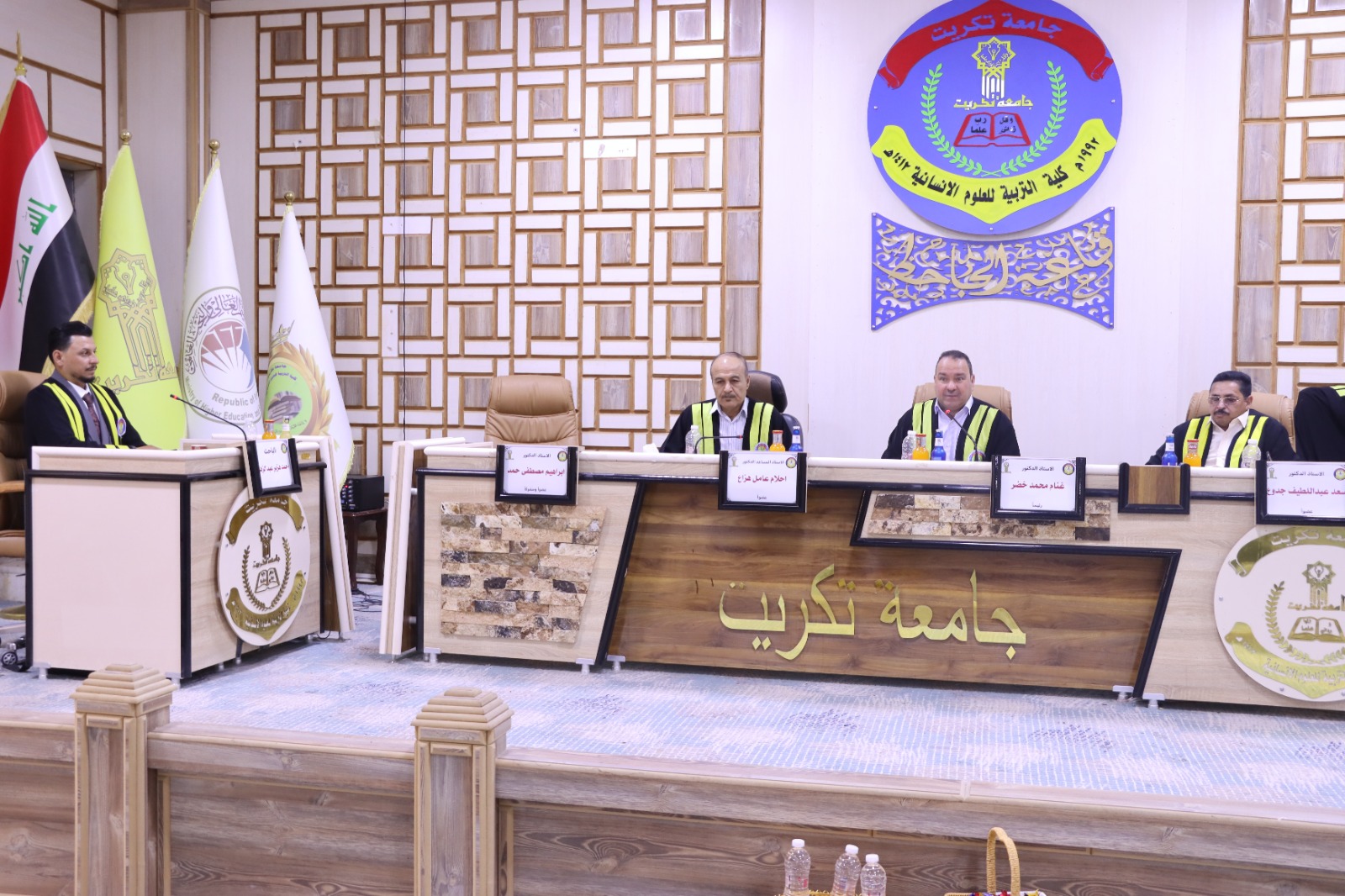
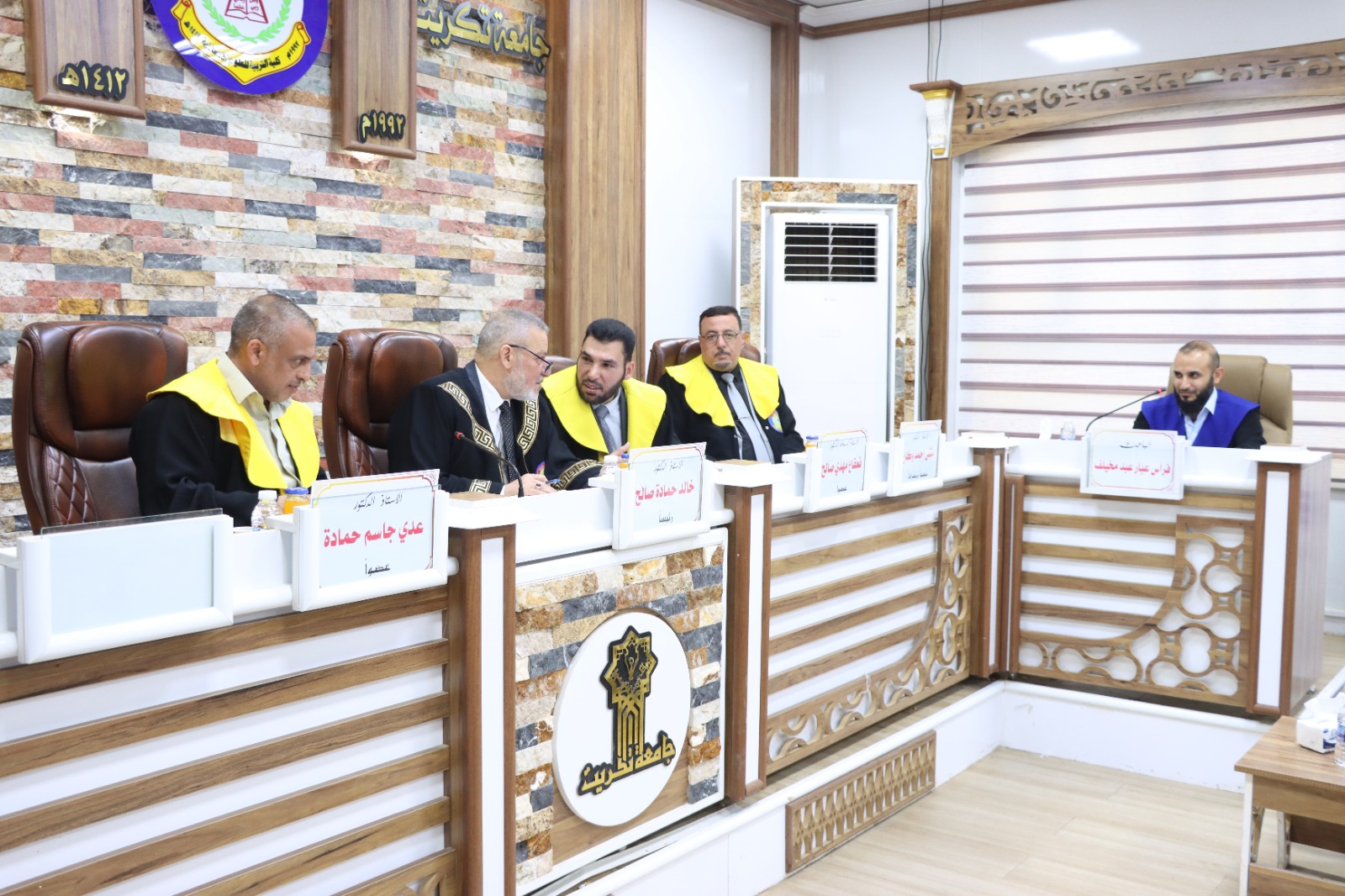
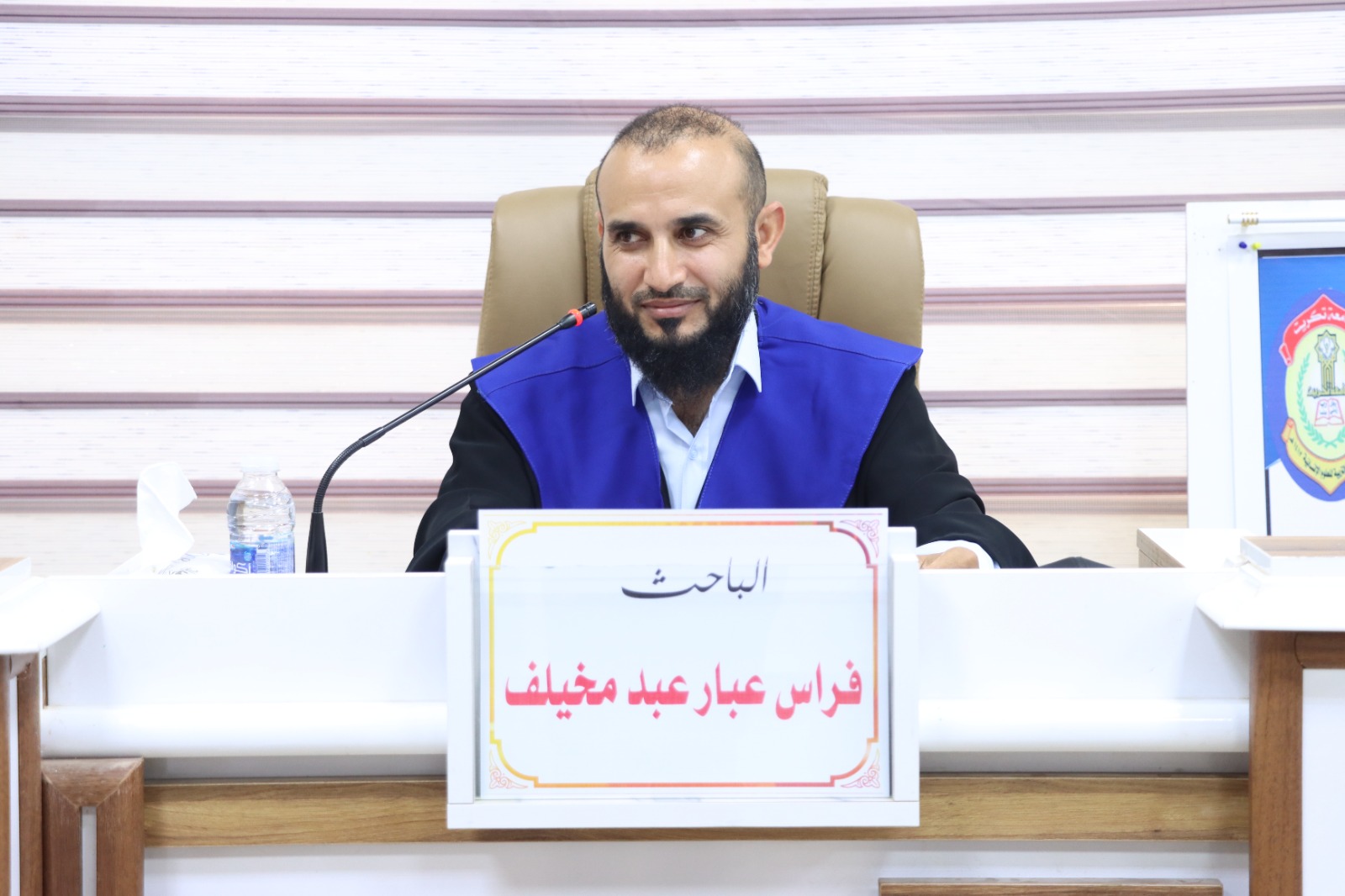
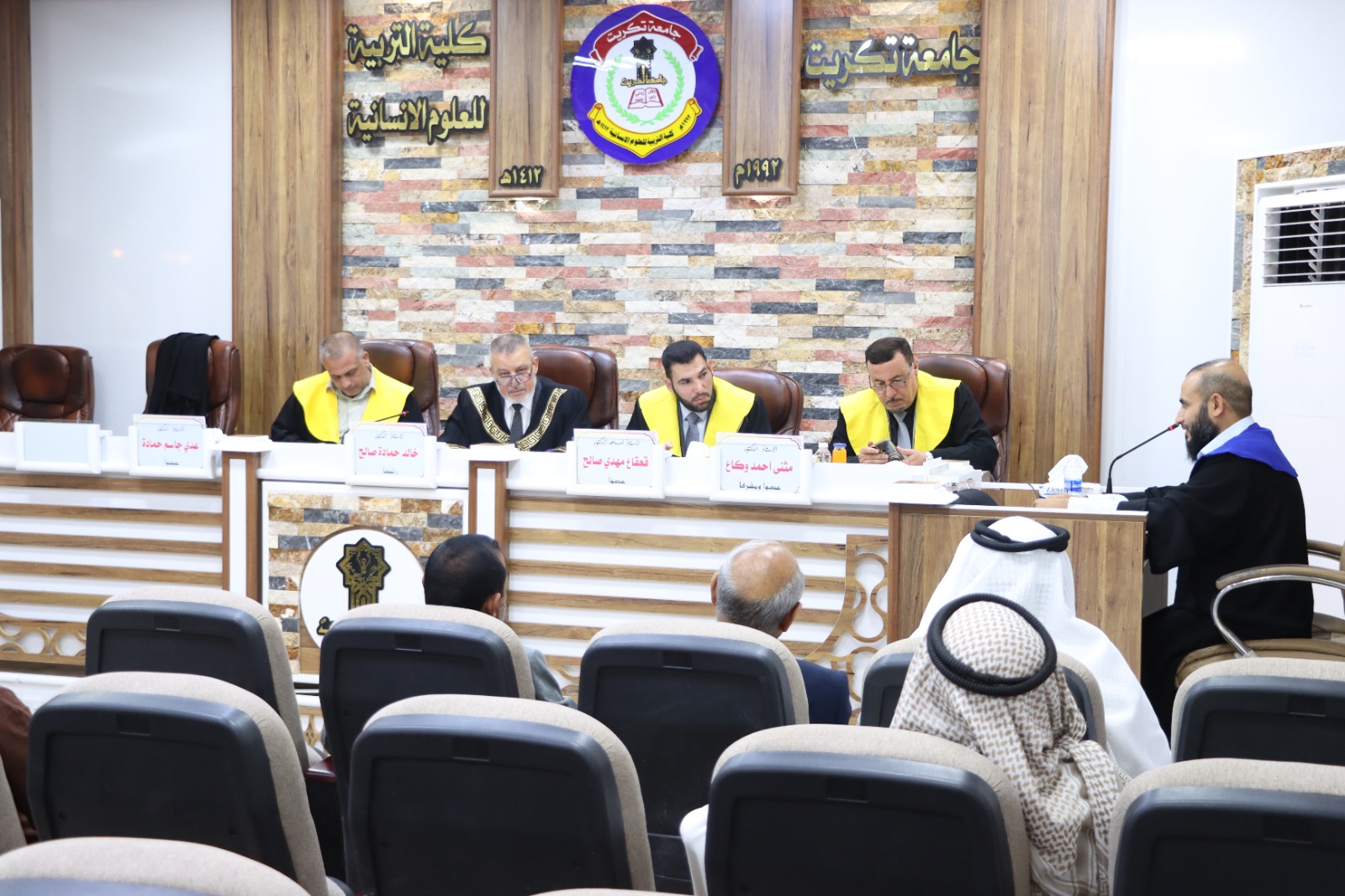
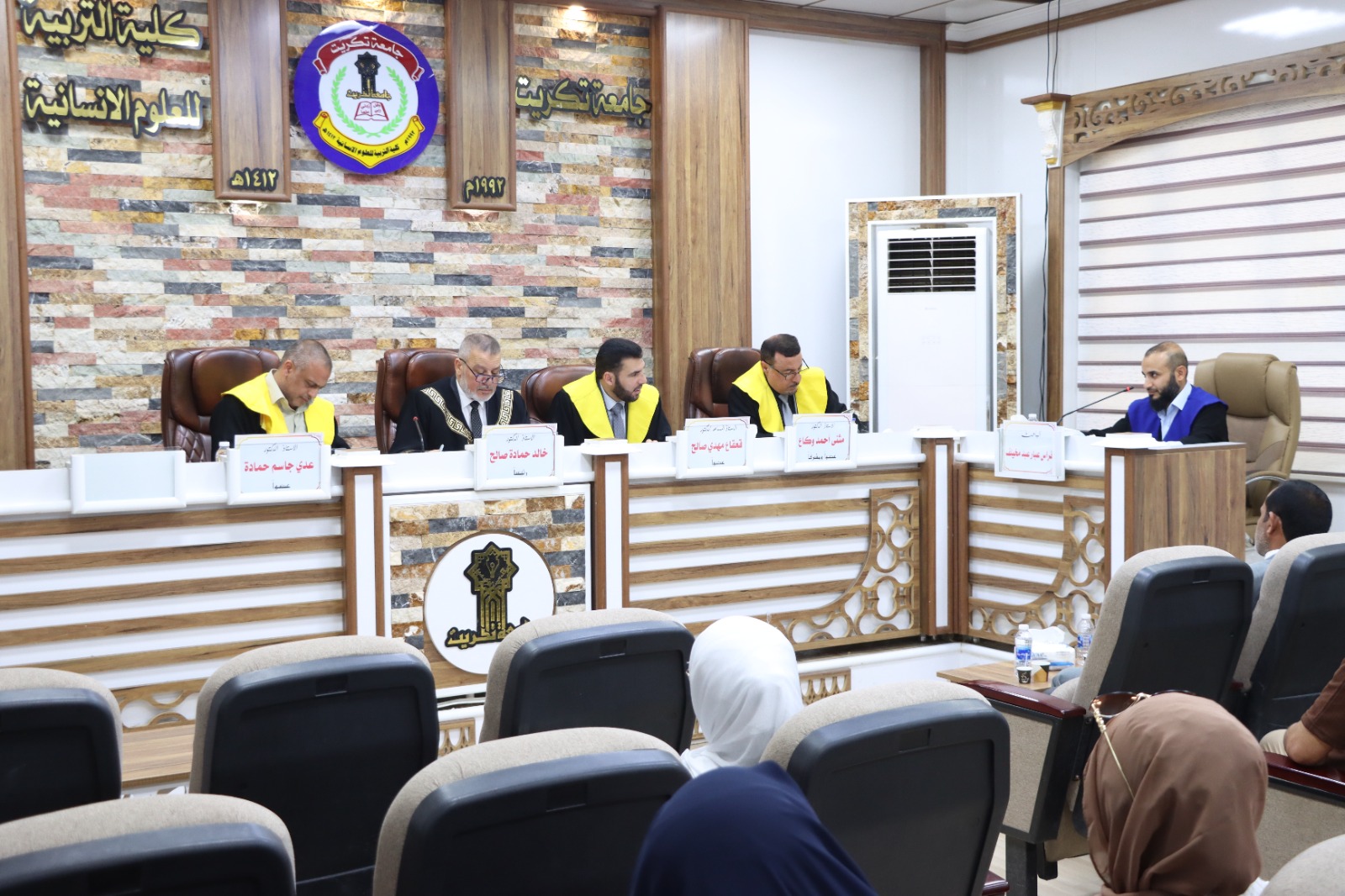
A Master’s thesis was defended at the College of Education for Humanities, Department of Quranic Sciences and Islamic Education, at University of Tikrit on Thursday (April 30, 2026), by the student Firas Abbar Abdul-Jannabi. The thesis was entitled:
“The Hadiths Narrated by Imam Ahmad (d. 241 AH) and Judged by Imam Al-Haythami (d. 807 AH) in Majma‘ al-Zawa’id wa Manba‘ al-Fawa’id with the Statement ‘Its Narrators Are Trustworthy’: From the Chapter on Laylat al-Qadr to the Chapter on the Prohibition of Torturing Animals and Mutilating Them – Compilation, Verification, and Study.”
The study aims to collect, authenticate (takhrij), and analyze the hadiths narrated by Imam Ahmad ibn Hanbal in his Musnad, which were evaluated by Imam Al-Haythami in Majma‘ al-Zawa’id with the expression: “Narrated by Ahmad, and its narrators are trustworthy.” The significance of the study lies in its integration of two major hadith sources: one being a foundational Musnad collection, and the other a comprehensive compilation of additional hadiths accompanied by concise critical judgments on their chains of transmission.
The study reached several key findings, including:
- Imam Ahmad ibn Hanbal is regarded as one of the greatest scholars of hadith and jurisprudence, widely known as the Imam of Ahl al-Sunnah, distinguished by his precision, integrity, and commitment to prioritizing textual evidence over personal opinion.
- The study demonstrates Imam Ahmad’s careful verification in narration and his balanced methodology in al-jarh wa al-ta‘dil (criticism and accreditation of narrators), as well as his role in disseminating the Sunnah through extensive scholarly journeys.
- Imam Ahmad’s steadfastness during the Mihnah (the inquisition regarding the createdness of the Qur’an) played a crucial role in preserving Islamic creed.
- Musnad Ahmad is among the largest hadith compilations, containing approximately thirty thousand hadiths arranged according to the names of the Companions rather than jurisprudential chapters.
- Although Imam Ahmad did not شرط the absolute authenticity of all narrations, he generally included reports that are close to acceptability, selecting hadiths based on the strength of their chains, the prominence of their texts, or scholarly necessity. The study also finds that Imam Al-Haythami’s use of the phrase “its narrators are trustworthy” represents a general judgment of reliability, though it may occasionally reflect a degree of leniency, particularly when relying on scholars known for a more flexible stance in narrator evaluation.
The examination committee consisted of the following faculty members:
- Prof. Dr. Khalid Hamada Salih – University of Tikrit / College of Education for Humanities (Chair)
- Prof. Dr. Uday Jassim Hamada – University of Tikrit / College of Education for Humanities (Member)
- Asst. Prof. Dr. Qa‘qa‘ Mahdi Salih – University of Tikrit / College of Islamic Sciences (Member)
- Prof. Dr. Muthanna Ahmed Waka‘ – University of Tikrit / College of Education for Humanities (Member and Supervisor)
Media and Government Communication Division
College of Education for Humanities – University of Tikrit