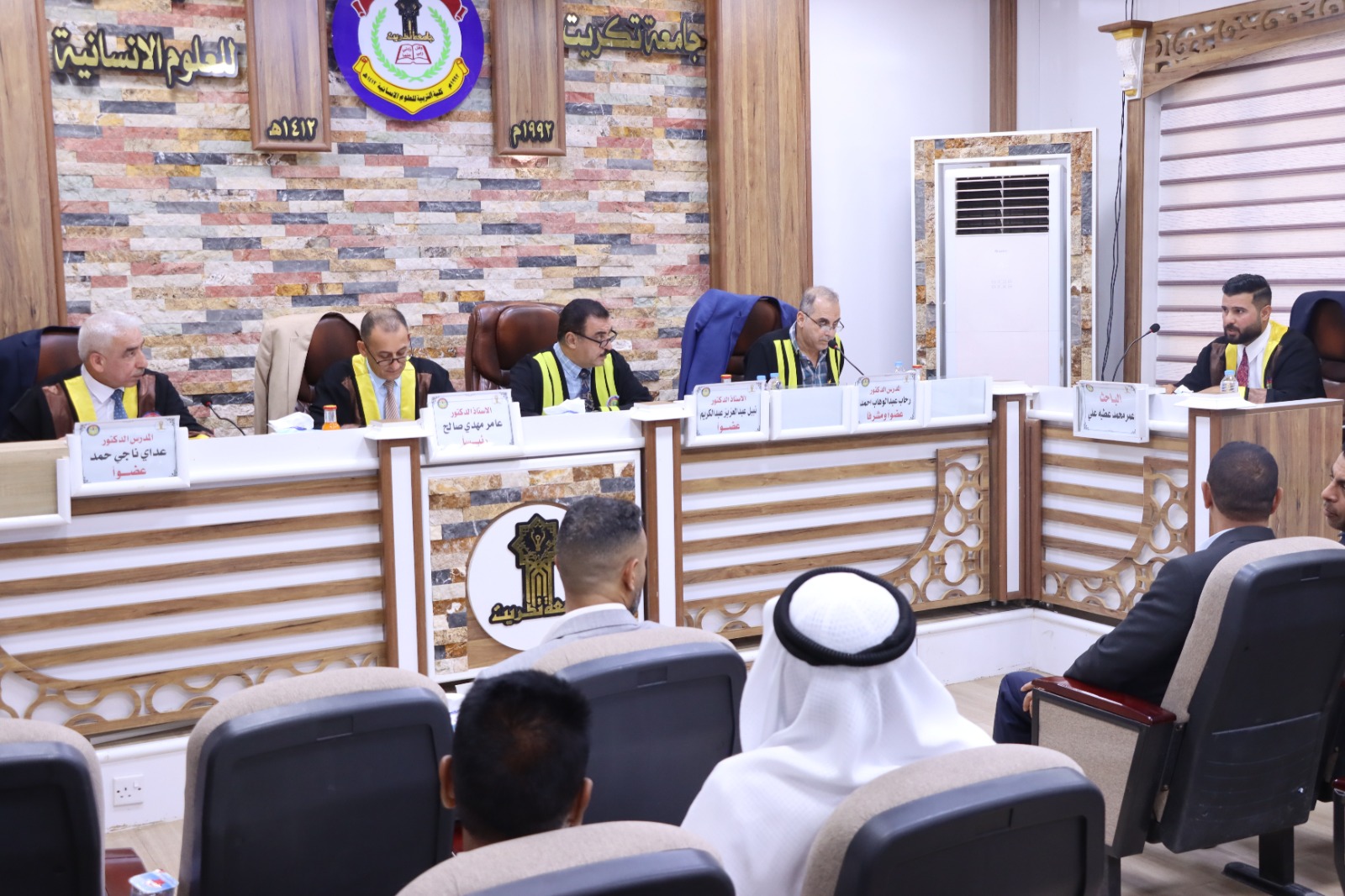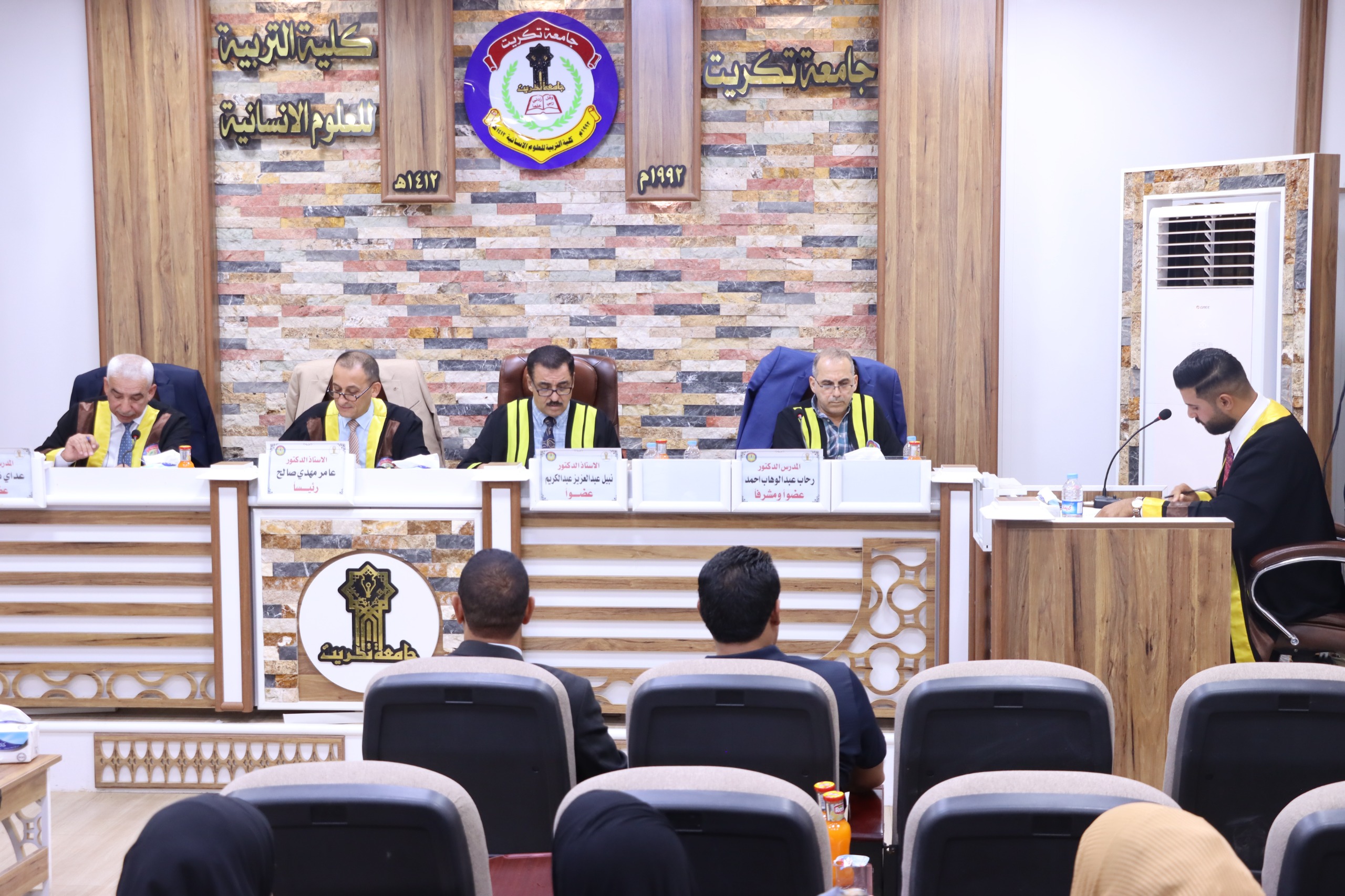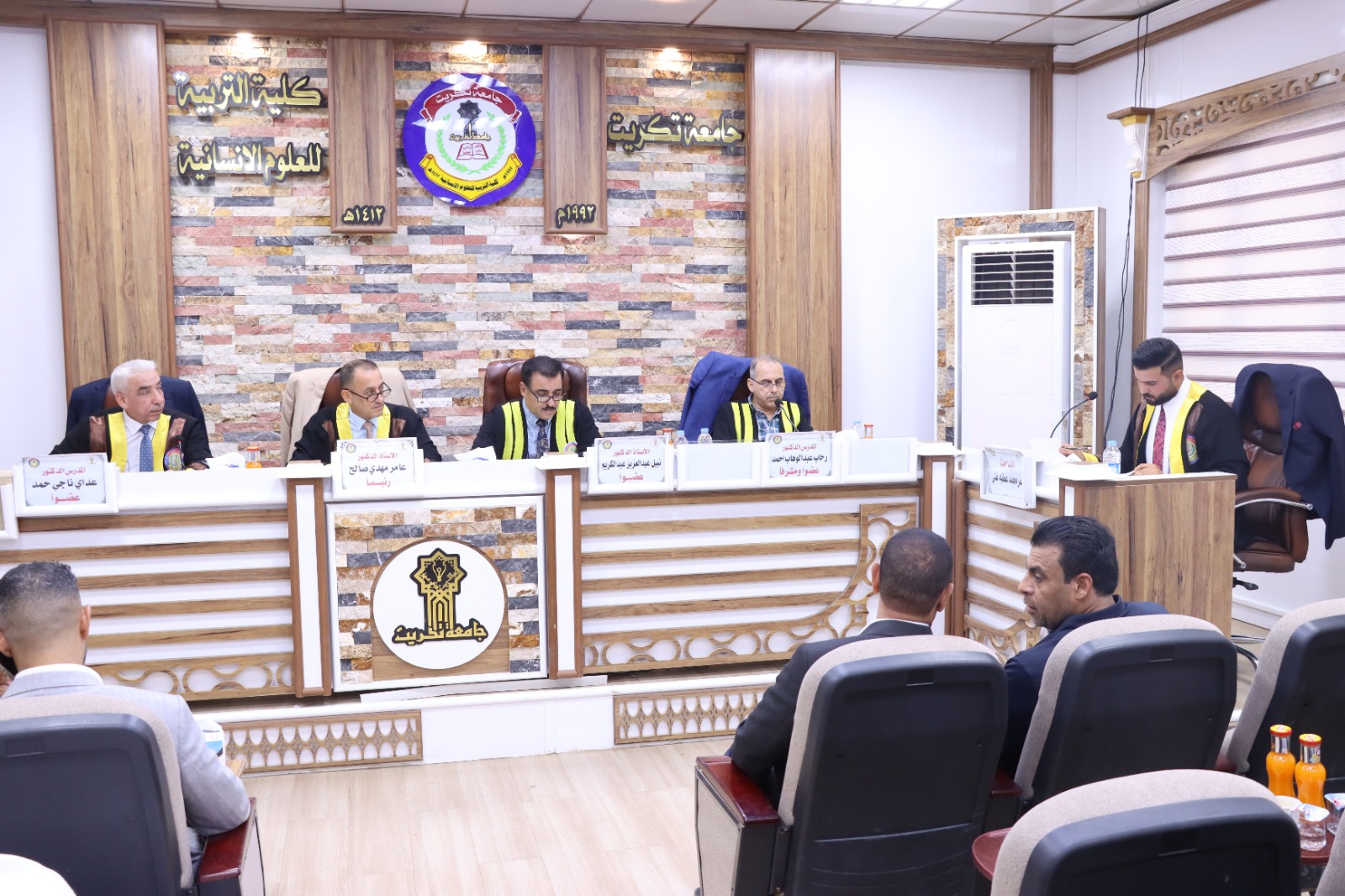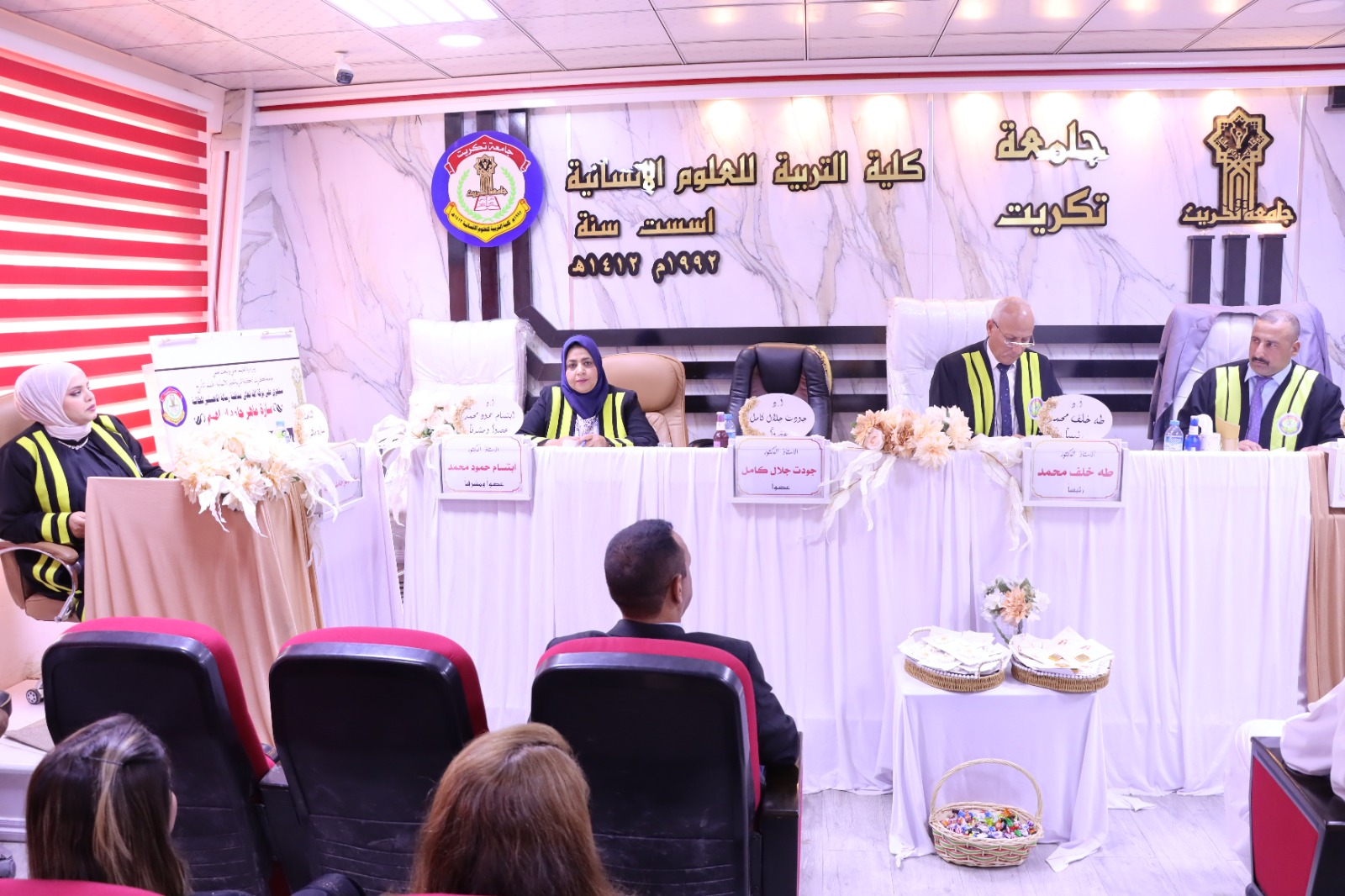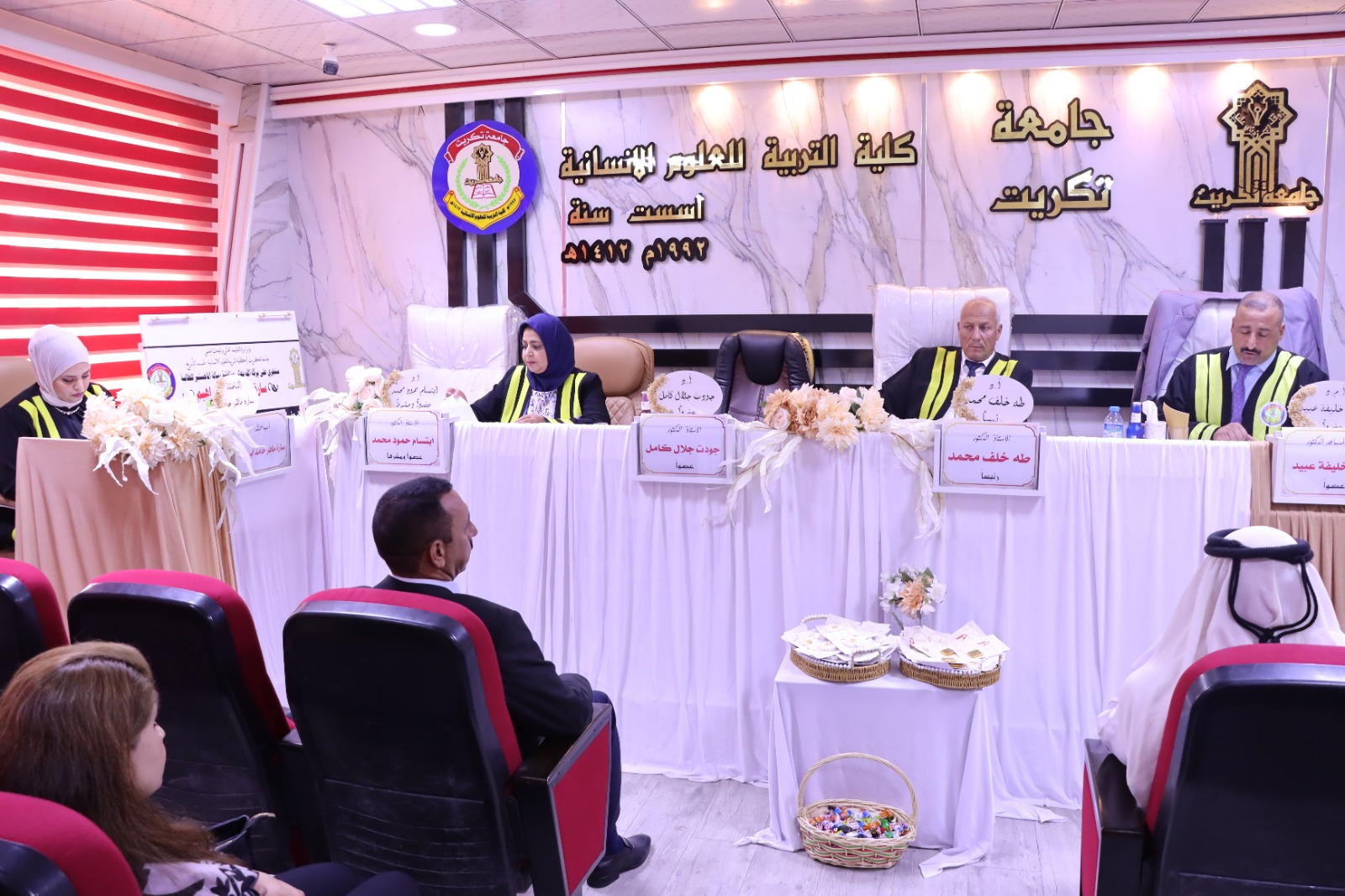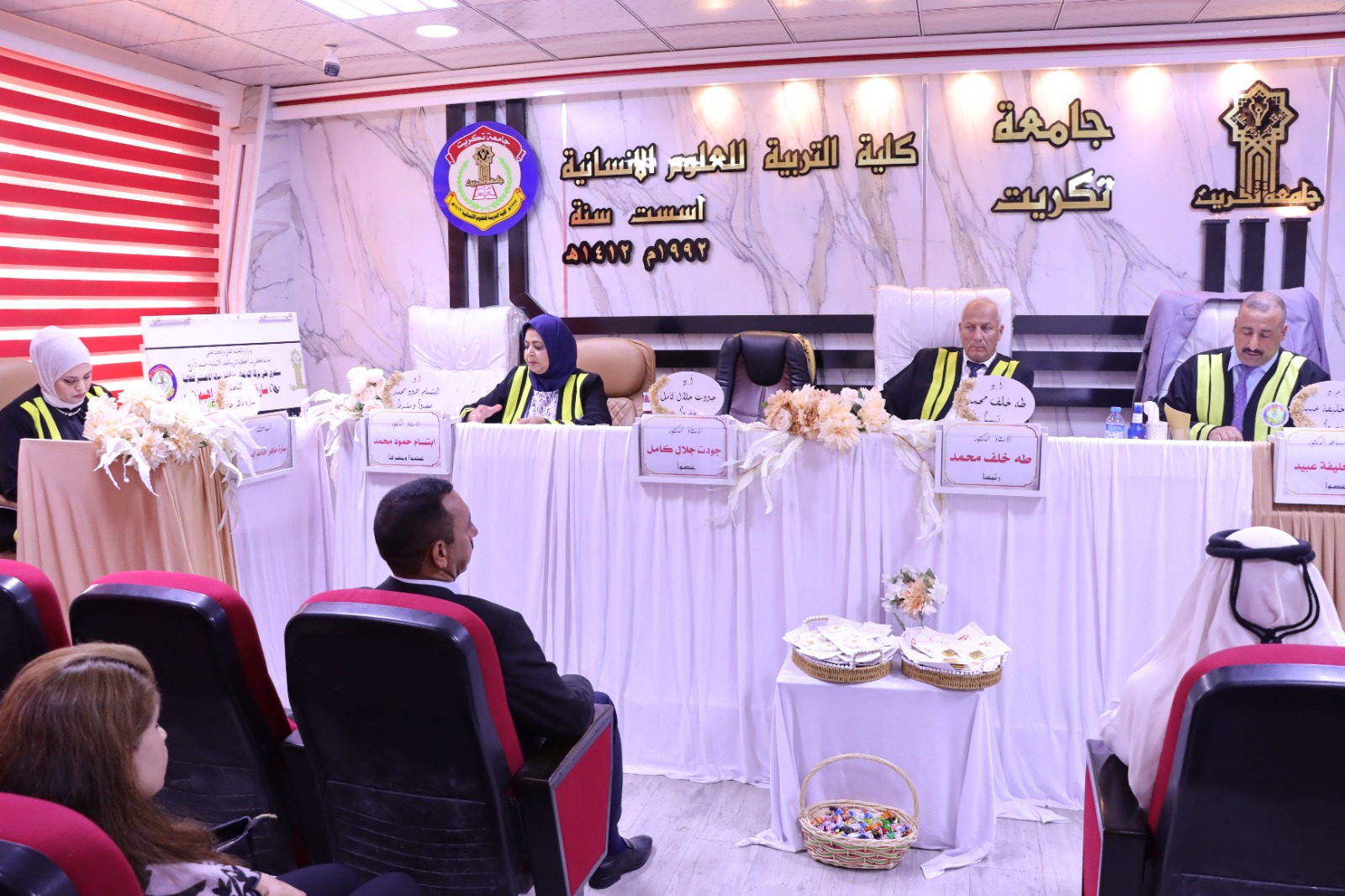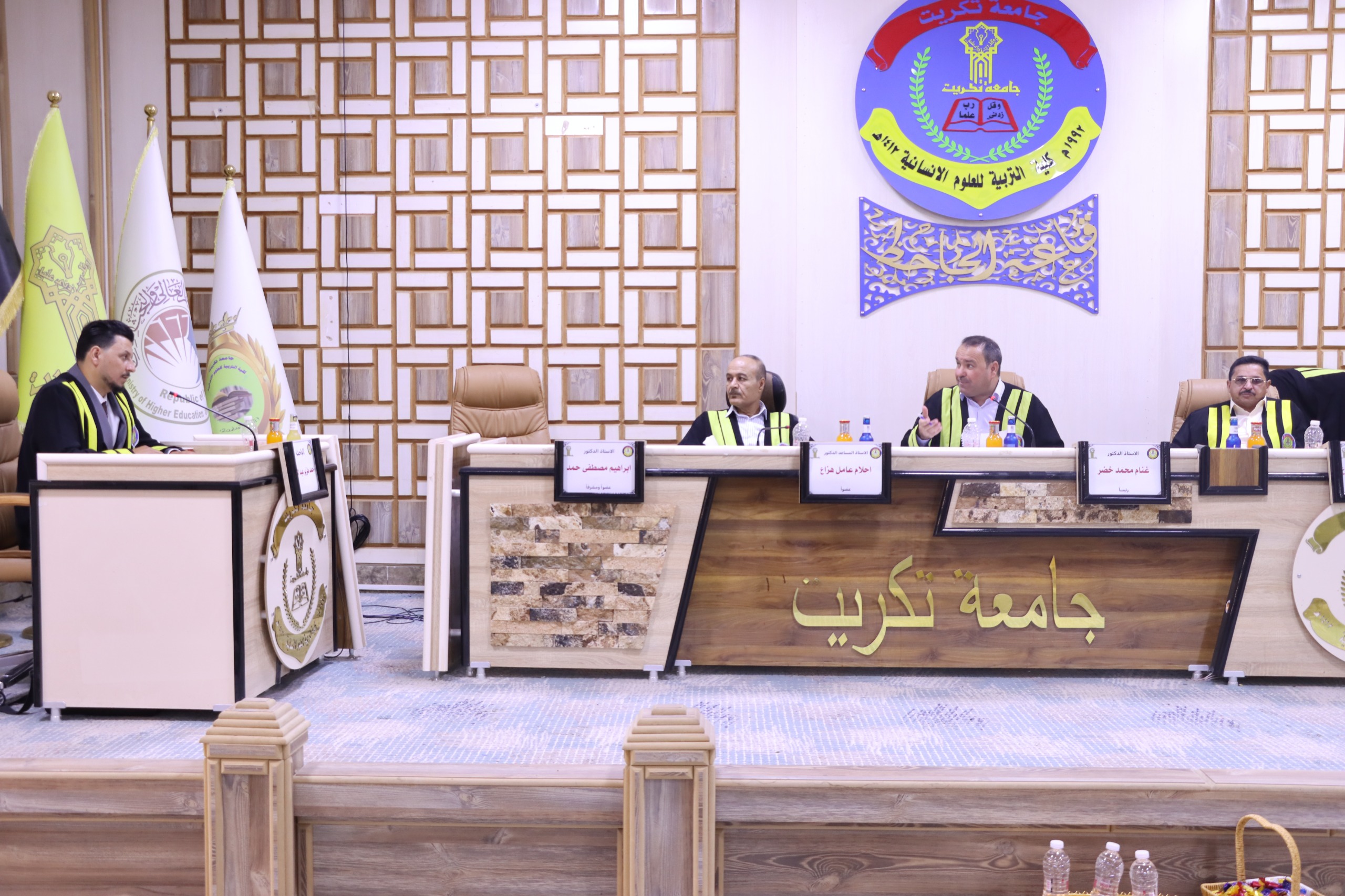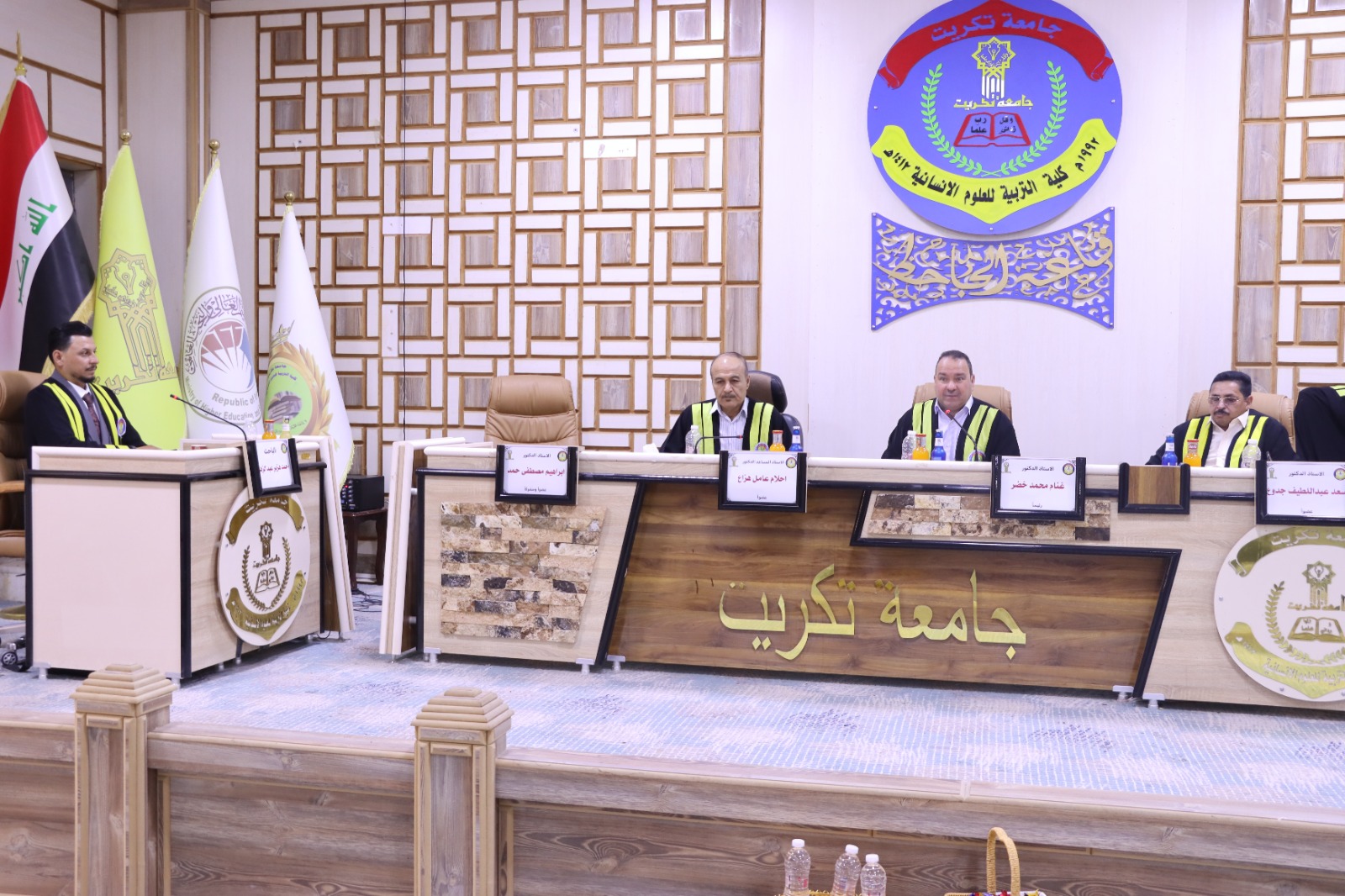
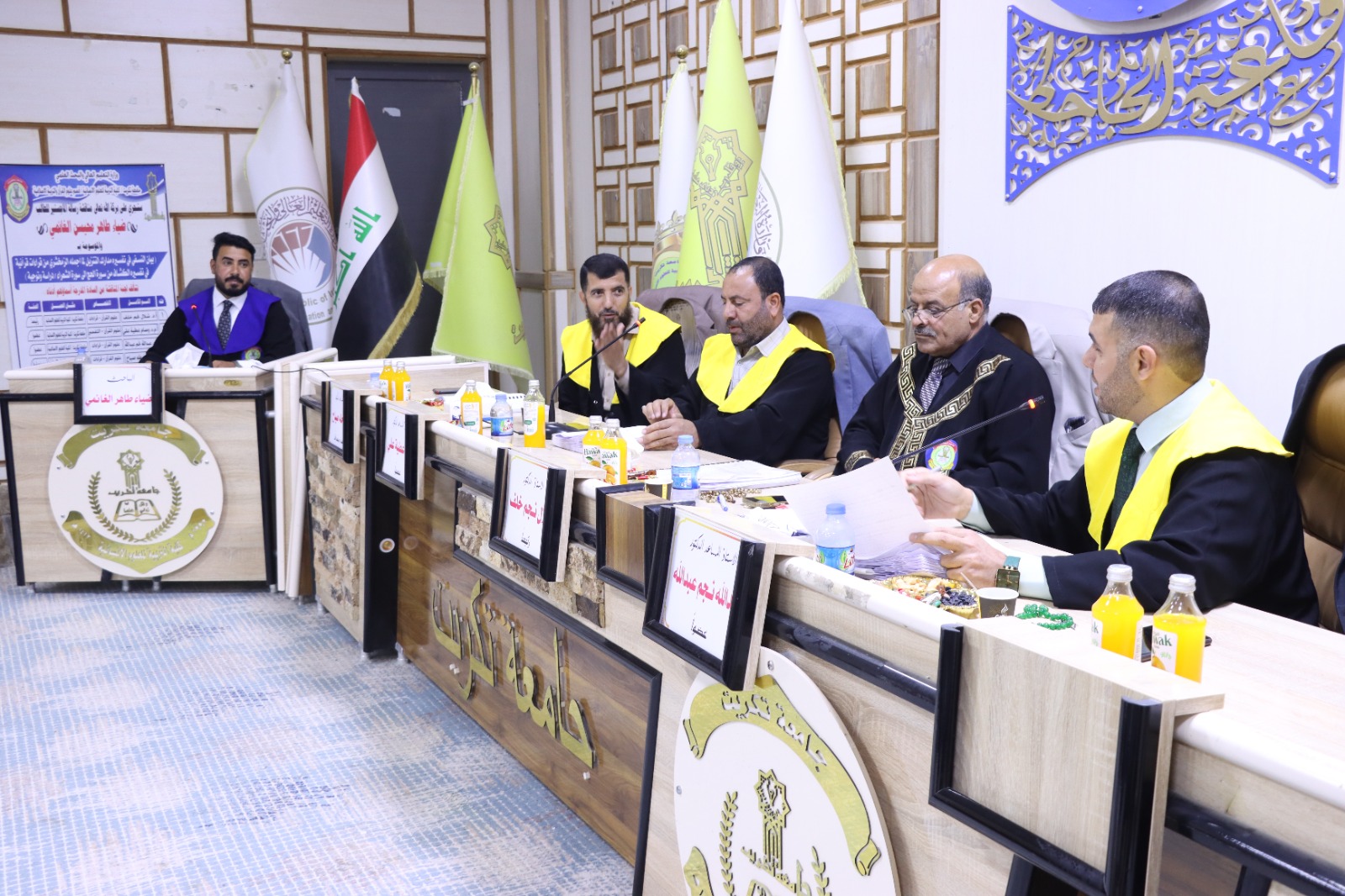
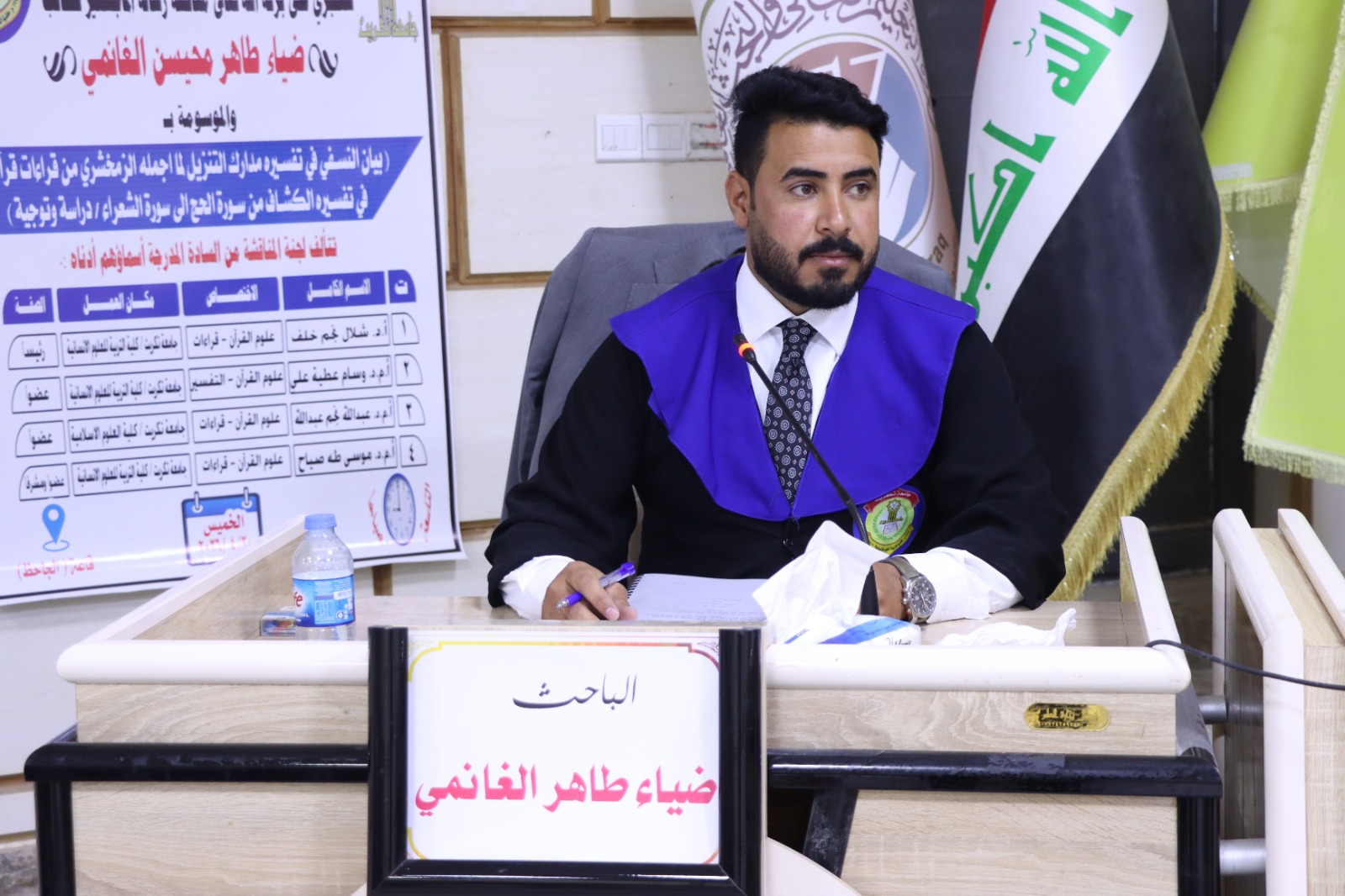
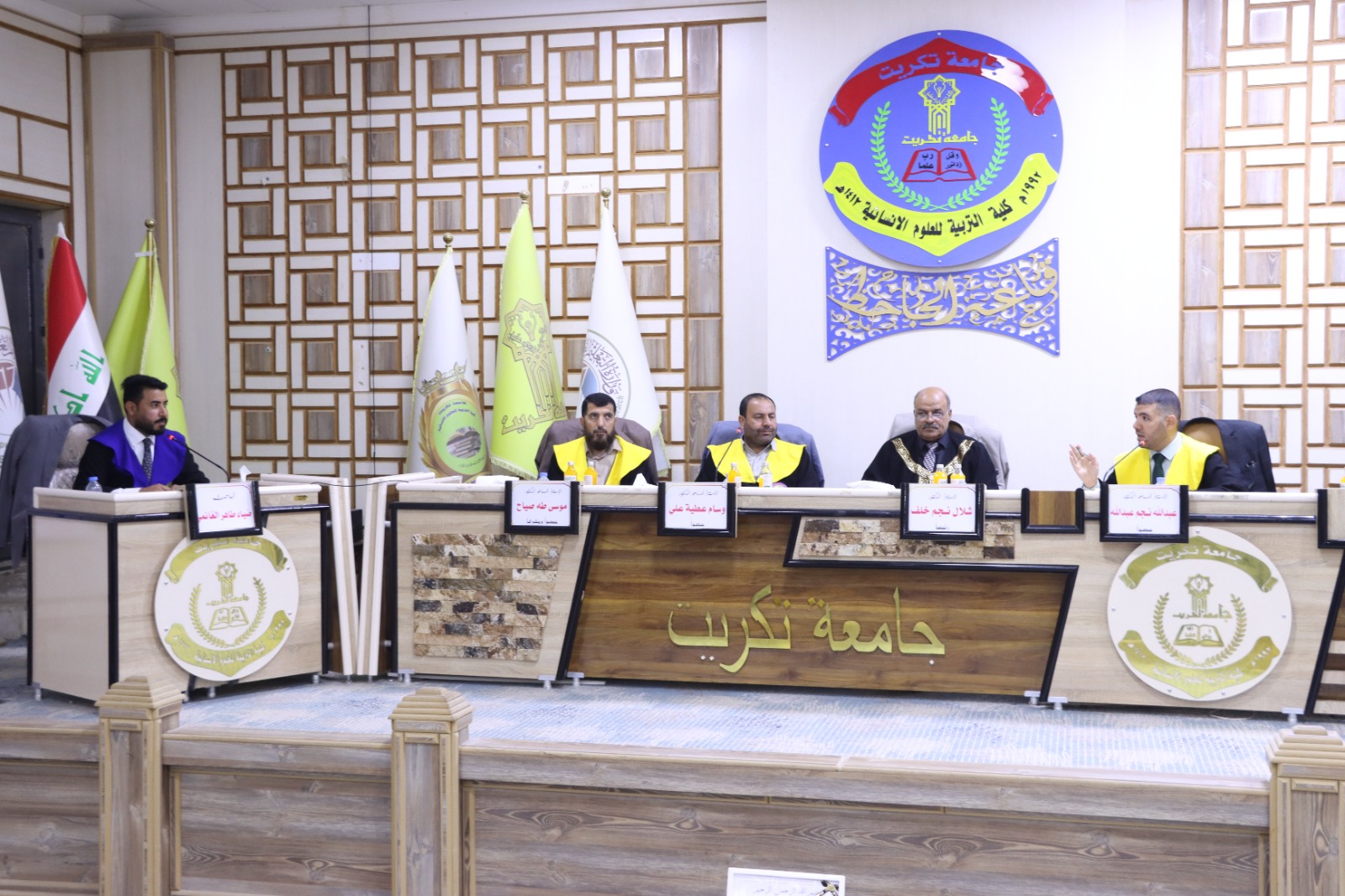
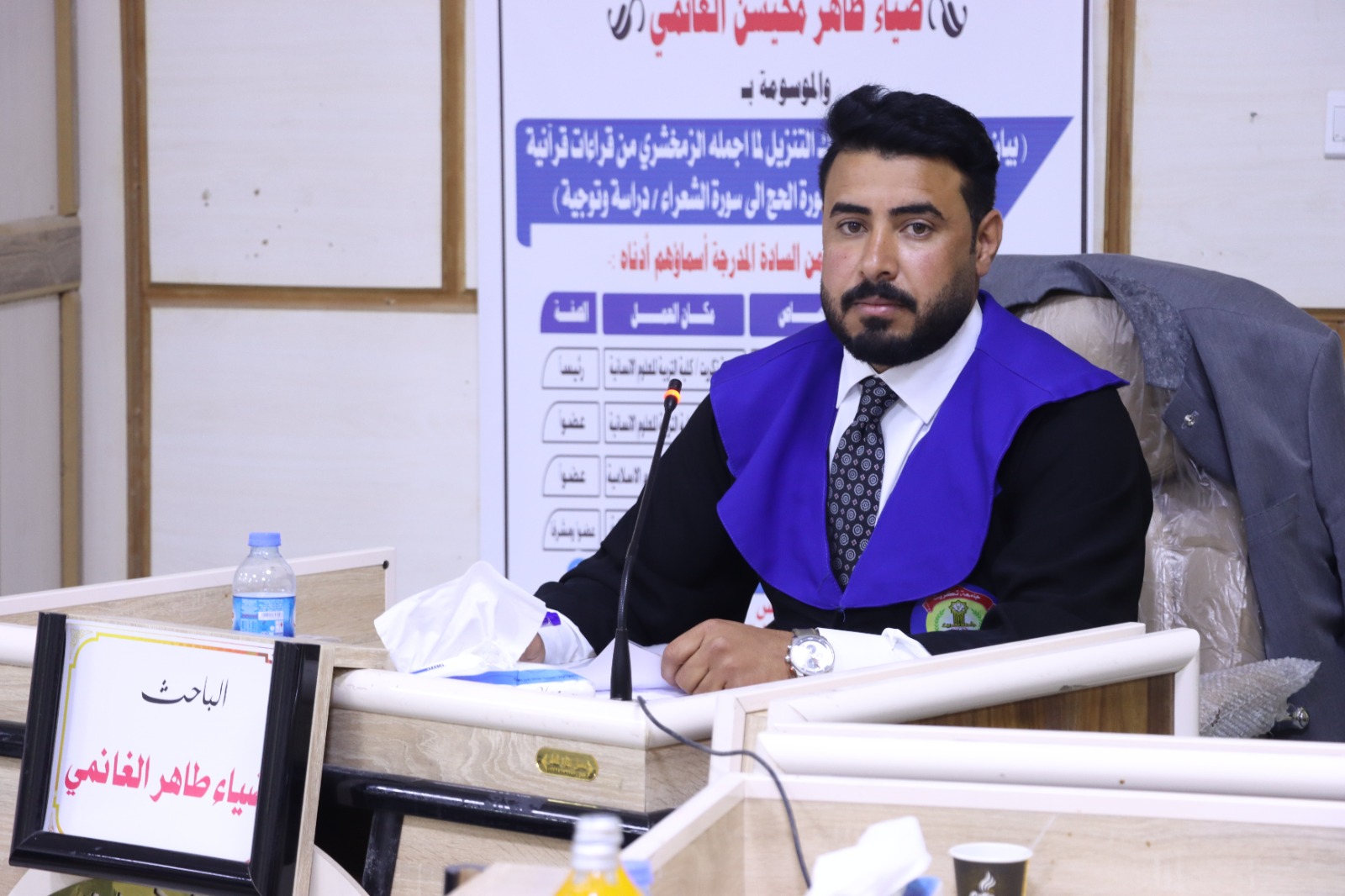
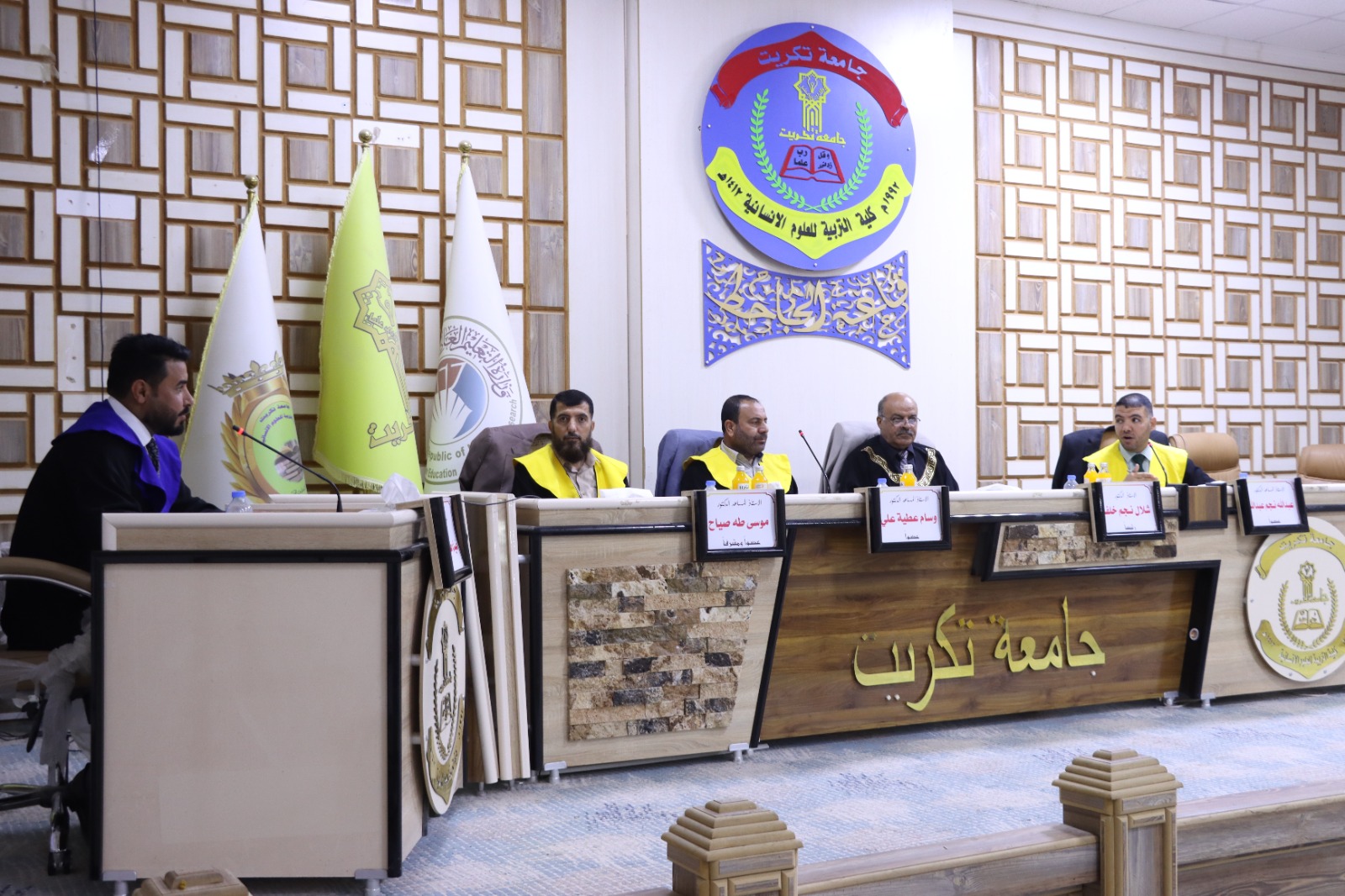
A Master’s thesis was defended at the College of Education for Humanities, Department of Quranic Sciences and Islamic Education, at University of Tikrit on Thursday (April 30, 2026), by the student Diaa Taher Muhsin Al-Ghanimi. The thesis was entitled:
“Al-Nasafi’s Elucidation in His Tafsir Madarik al-Tanzil of the Qur’anic Readings Concisely Presented by Al-Zamakhshari in His Tafsir Al-Kashshaf (From Surah Al-Hajj to Surah Al-Shu‘ara’) – An Analytical and Interpretive Study.”
The study investigates the approach of the scholar Al-Nasafi in clarifying the Qur’anic readings that were concisely mentioned by Al-Zamakhshari in his renowned exegesis Al-Kashshaf. Covering the period from Surah Al-Hajj to Surah Al-Shu‘ara’, the research adopts an analytical and interpretive methodology, focusing on tracing the Qur’anic readings within the selected surahs and examining Al-Nasafi’s method in detailing, verifying, and interpreting these readings.
The study highlights the scholarly stature of both Al-Zamakhshari and Al-Nasafi and their significant contributions to the science of Qur’anic readings through their exegetical works. It demonstrates that Al-Zamakhshari often presented readings in a concise manner without attribution, whereas Al-Nasafi distinguished himself through precise attribution to the reciters, along with linguistic and interpretive analysis.
The findings reveal that Al-Nasafi tended to focus primarily on the widely accepted (mutawatir) readings, in contrast to Al-Zamakhshari, who occasionally included irregular (shadh) readings. The study also reaffirms the three شروط for the acceptance of Qur’anic readings and underscores the role of variant readings in enriching meaning and expanding interpretive possibilities without contradiction. Furthermore, it emphasizes that Qur’anic readings are a transmitted tradition based on روایت and reception, rather than personal opinion or independent reasoning.
The thesis concludes that the diversity of Qur’anic readings serves as evidence of the preservation of the Qur’an from distortion and represents one of the aspects of its rhetorical and linguistic inimitability.
The examination committee consisted of the following faculty members:
- Prof. Dr. Shallal Najm Khalaf – University of Tikrit / College of Education for Humanities (Chair)
- Asst. Prof. Dr. Wissam Atiyah Ali – University of Tikrit / College of Education for Humanities (Member)
- Asst. Prof. Dr. Abdullah Najm Abdullah – University of Tikrit / College of Islamic Sciences (Member)
- Asst. Prof. Dr. Musa Taha Sayyah – University of Tikrit / College of Education for Humanities (Member and Supervisor)
Media and Government Communication Division
College of Education for Humanities – University of Tikrit